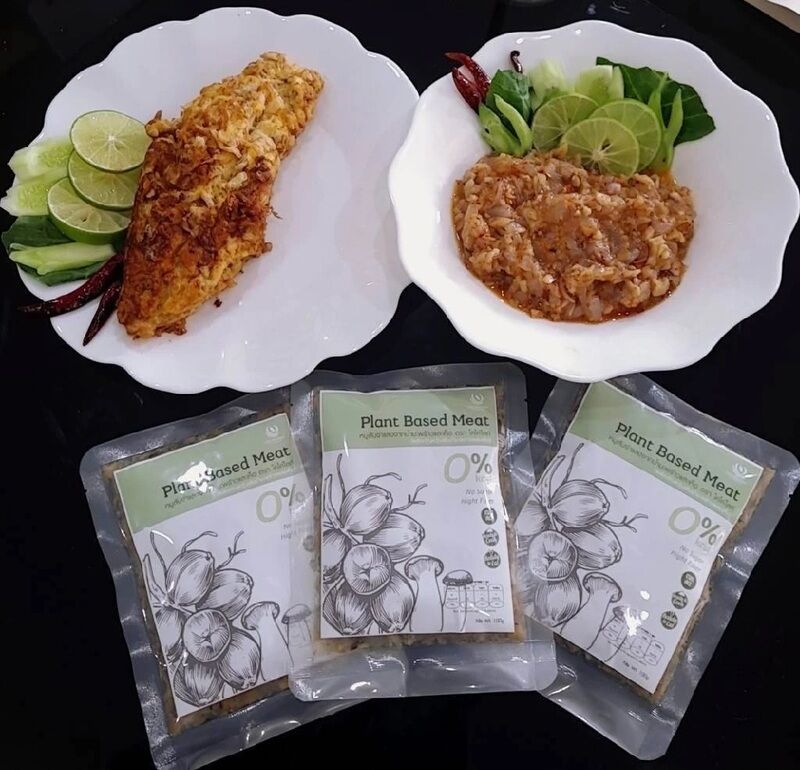
Sangtuptim Inter Co., a Thai manufacturer of coconut-based products, patented a plant-based pork alternative made using local coconut water and king oyster mushrooms. The company known for its non-fat, sugar-free coconut vermicelli noodles recognizes the growing demand for plant-based alternatives in Thailand—the plant-based sector has grown by 61% in the last five years and is expected to reach $45 billion in 2024.
Sangtuptim Inter Co. developed the meat analog under the Department of Industrial Promotion’s (DIPROM) Reshape the Future policy. Already, the plant-based meat created with coconut water won a gold award at the International Invention and Trade Expo in the UK, representing an innovative product that boosts the value of local food products.
What's Driving This Trend
- Coconut-based Protein Innovations
- Leveraging coconut water to develop plant-based meat offers a novel approach that taps into sustainable and locally-sourced ingredients.
- Award-winning Plant-based Meats
- Products gaining international acclaim, such as the gold-awarded plant-based pork, highlight the market's readiness for culinary innovation and quality.
- Rise of Functional Food Alternatives
- The integration of nutrient-rich components like king oyster mushrooms into meat substitutes underscores a shift toward multifunctional food products.
Who This Affects Most
- Plant-based Foods
- With a rapid growth trajectory, the plant-based sector is set to transform dietary habits and offer lucrative opportunities for new product entries.
- Coconut Product Manufacturing
- Innovating existing coconut-based production lines to create meat alternatives signifies an adaptive reuse of resources in manufacturing.
- Functional Food and Nutrition
- Creating meat analogs with added nutritional benefits is pushing the boundaries of functional foods, blending taste with health advantages.