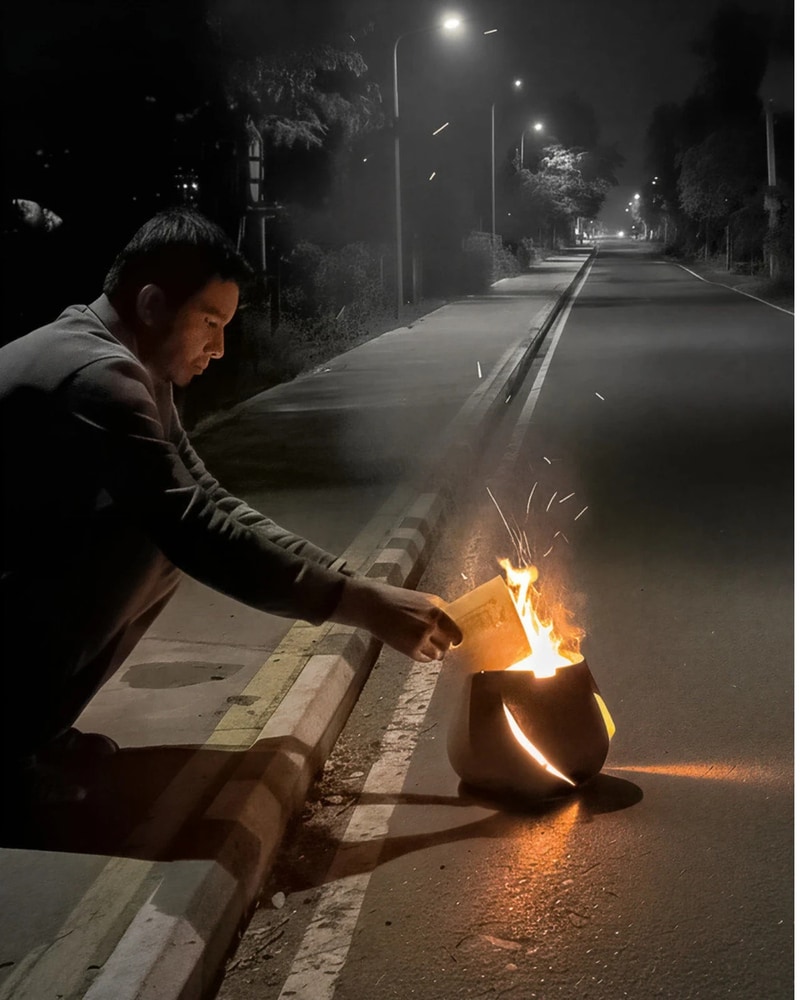
The Peace Urn was developed by Hao Qian, Xiyue Yang, Zetong Song, Chenchen Du, and Yichen Fan to support joss paper burning during the Ghost Festival in urban environments. The student project received a 2026 Student Notable award in the Lifestyle Accessories category. Made from unglazed heat-resistant clay, the vessel uses an engineered airflow system to reduce drifting ash and manage smoke while keeping the ritual's open flame visible. Its circular form also references the traditional practice of drawing a sacred circle on the ground before burning offerings.
The urn was designed to improve fire safety without altering the cultural significance of the ritual. Openings in the vessel maintain visibility of the flames, while the airflow pattern helps contain ash during combustion. The unglazed clay develops soot and heat marks through repeated use, allowing the surface to change over time.
What's Driving This Trend
- Ritual-safe Design
- Urban religious practices are creating demand for ceremonial objects that preserve symbolic meaning while embedding smoke, ash, and flame-control features.
- Visible Containment
- A growing balance between open-flame authenticity and enclosed combustion points to products that make hazardous rituals safer without making them feel sanitized.
- Aging Materiality
- Heat-marked clay and soot-responsive surfaces suggest new value in objects that visibly accumulate use, memory, and cultural continuity over time.
Who This Affects Most
- Lifestyle Accessories
- Design-led ritual vessels introduce opportunities for culturally specific accessories that merge emotional utility, safety engineering, and display-worthy aesthetics.
- Fire Safety
- Traditional burning ceremonies represent an underserved context for compact containment systems that reduce risk in dense residential and public environments.
- Cultural Goods
- Contemporary reinterpretations of heritage practices are reshaping cultural product markets through artifacts that respect tradition while fitting modern urban constraints.