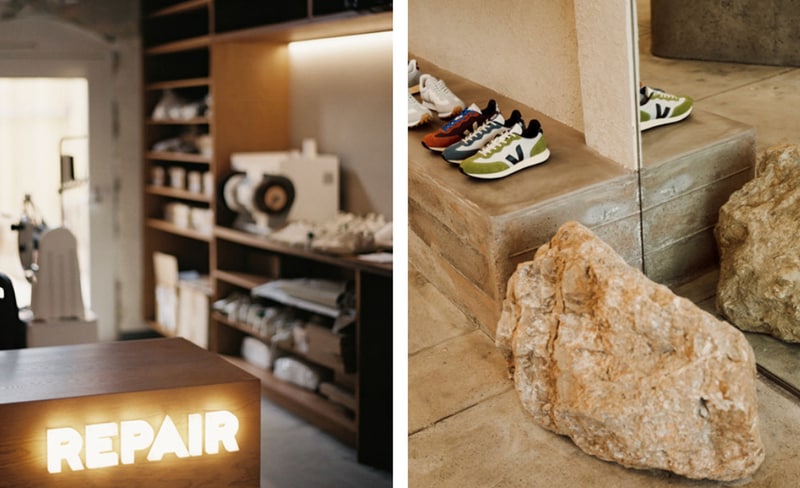
OWIU Design has completed the first West Coast flagship store for VEJA, located on Abbot Kinney Boulevard in Venice Beach. As part of this project, the designers transformed a historic 1923 building through a restrained material-led approach that prioritizes preservation and craftsmanship.
The interior of VEJA's store retains original brick walls and wooden beam ceilings. OWIU Design applied a sand-plaster finish that creates a soft, quiet patina throughout. Hand-poured sculptural concrete elements in a custom blush tone, on the other hand, function as both product displays and seating. These gentle curves contrast with the building's industrial framework.
OWIU Design also positioned a visible cobbler station as a central feature of the store. Drawing inspiration from the sensibilities of open kitchen designs, this reinforces VEJA's commitment to repair and maintenance by framing shoe care as an integral part of the product lifecycle.
Image Credit: OWIU Design
Key Themes Behind This Trend
- Material-led Preservation
- A resurgence of restrained, material-focused design that marries historic fabric with contemporary craft creates opportunities for new preservation-led retail typologies and adaptive re-use business models.
- Craft-centric Retail Experiences
- The emphasis on handcrafted finishes and bespoke display elements signals demand for retail environments that prioritize artisanal identity over mass-produced uniformity, enabling differentiated brand-to-customer touchpoints.
- In-store Repair Visibility
- Prominent cobbler and repair stations reframing maintenance as part of the product lifecycle suggest service-integrated retail formats that extend product longevity and customer engagement.
Where This Applies
- Retail Architecture
- Design practices that combine conservation techniques with bespoke material systems can redefine flagship projects and unlock premium placemaking services.
- Footwear Retail
- Stores that foreground repairability and tactile product storytelling offer new avenues for post-purchase services and circular revenue streams.
- Sustainable Fashion
- Brands embedding visible maintenance and durable-material narratives within retail spaces reflect opportunities for lifecycle-focused product lines and circular business models.