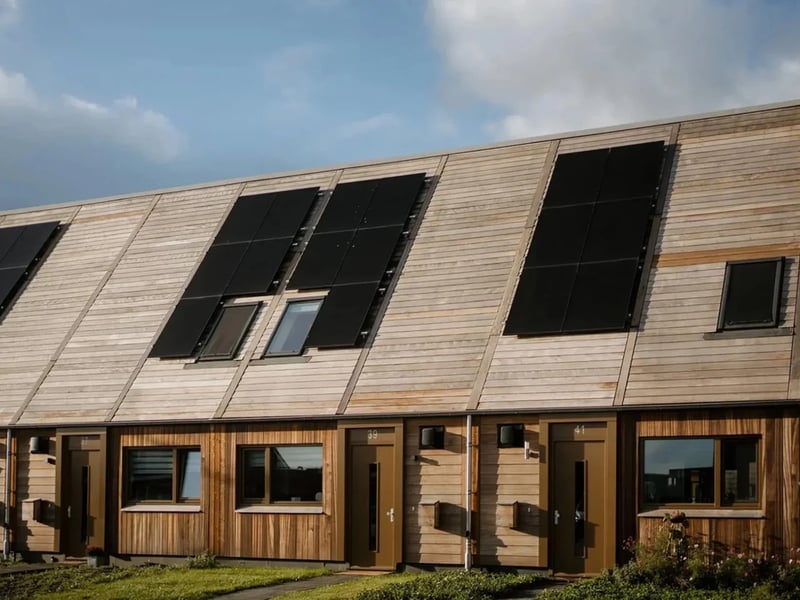
The Marknesse housing project is a carbon-negative residential development designed by ORGA for housing association Mercatus in the Netherlands. The Marknesse homes comprise 12 affordable rental units intended for first-time buyers and lower-income residents. ORGA designed the project using bio-based and circular materials while drawing from the region’s traditional red-brick architectural character. The development achieves a 76% share of bio-based and circular raw materials and uses renewable resources throughout most of the structure. Wooden chimneys were also incorporated to provide nesting spaces for local bat populations.
The homes are constructed from prefabricated timber elements manufactured off-site and assembled on location to reduce construction time and site disruption. Timber framing is insulated with wood fiber and other natural materials, creating a breathable wall system that regulates moisture without plastic vapor barriers.
Image Credit: ORGA
What's Driving This Trend
- Carbon-negative Residential Design
- Growing adoption of whole-building carbon-negative strategies creates opportunities for housing models that sequester more carbon than they emit over their lifecycle.
- Bio-based and Circular Materials
- High shares of bio-based and recyclable inputs highlight potential for material systems that replace conventional petrochemical-bound components with regenerative alternatives.
- Prefab Timber and Off-site Construction
- Precision-manufactured timber modules point to reduced site disruption and accelerated delivery models that upend traditional on-site construction workflows.
Who This Affects Most
- Affordable Housing Development
- Rising demand for low-cost, climate-positive rental units indicates new financing and procurement approaches centered on lifecycle carbon performance.
- Construction Materials Manufacturing
- Producers of insulation, connectors, and structural elements face prospects for retooling toward certified bio-based, circular products with traceable supply chains.
- Urban Biodiversity and Ecological Design
- Inclusion of habitat features such as wooden chimneys reveals potential for embedding biodiversity-supporting elements into residential design standards.