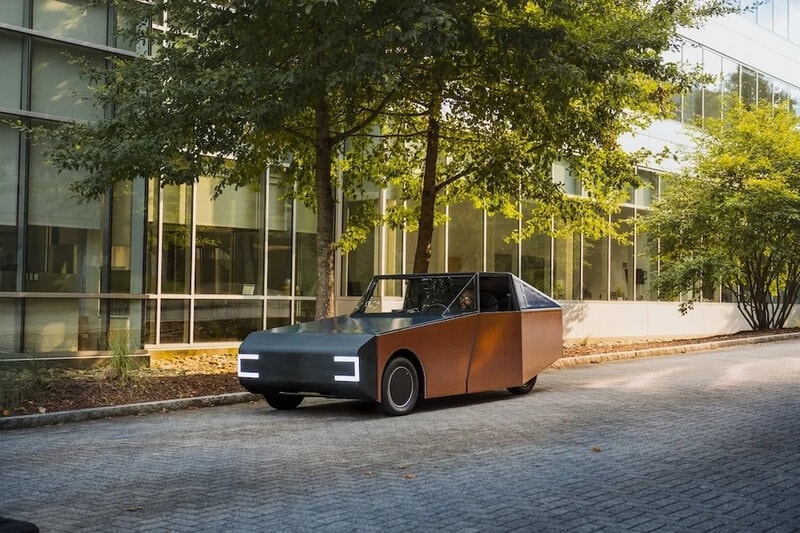
Deep Orange 17 Luminetta is a research electric vehicle developed through Clemson University's Deep Orange program in collaboration with BMW. The compact two-seater integrates more than 1,700 photovoltaic cells across nearly every exterior surface, allowing it to generate electricity while driving, parked or stationary. Developed with Germany's Fraunhofer Institute for Solar Energy Systems, the solar array continues producing power under partial shade. Simulations indicate the prototype can generate enough energy for a typical 12-mile daily urban commute while producing an average surplus equivalent to about 31 miles of additional driving range under favorable conditions.
The lightweight chassis combines steel, aluminum, carbon fiber and 3D-printed components, resulting in a total weight of 1,212 pounds. A streamlined body inspired by the boxfish reduces aerodynamic drag while maximizing solar collection area, supported by regenerative braking, intelligent torque distribution and optimized drivetrain controls. Weather simulations across Greenville, Frankfurt, Madrid and Mumbai projected energy-positive performance under varying conditions.
Image Credit: BMW Group
Why This Trend Is Growing
- Energy-positive Mobility
- Solar-integrated EVs point to vehicles that generate surplus power in daily use, reshaping expectations for charging infrastructure and urban transportation economics.
- Vehicle-integrated Photovoltaics
- Embedding photovoltaic cells across exterior surfaces creates new value in automotive design where body panels become active energy assets.
- Lightweight Solar Design
- Advanced materials, aerodynamic forms and 3D-printed components enable compact EVs to extend range while maximizing onboard energy generation.
Industries Being Reshaped
- Electric Vehicles
- Automakers can explore solar-assisted platforms that reduce charging dependence and differentiate compact urban mobility products.
- Solar Energy
- The expansion of photovoltaics into vehicle surfaces broadens demand for flexible, shade-tolerant solar technologies beyond buildings and utility installations.
- Advanced Materials
- Hybrid chassis systems using steel, aluminum, carbon fiber and additive manufacturing create openings for lighter, more efficient transportation architectures.