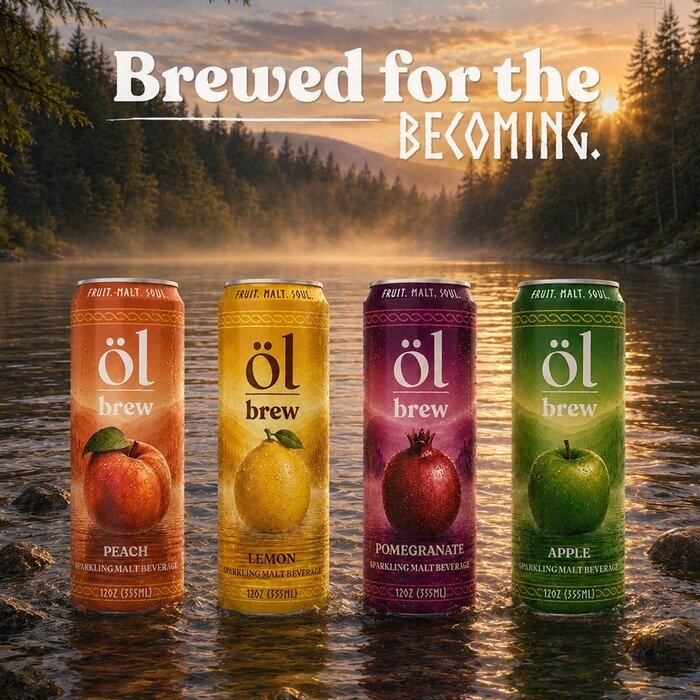
As the non-alcoholic category continues to grow, öl brew is setting itself apart with a free-from, low-calorie option that's crafted with just a handful of ingredients: barley malt, real fruit juice, pure cane sugar, and a plant-based stevia blend. This first-of-its-kind all-natural flavored malt beverage excludes all artificial sweeteners, flavors, colors and preservatives, and offers simply, caffeine-free, alcohol-free, plant-powered refreshment in vibrant flavors like Pomegranate, Peach, Apple, and Lemon.
“We created öl brew for people who love the ritual of a great drink but want fewer calories, no alcohol, and nothing artificial—without settling for another seltzer,” said Lana Wimmer, Founder of öl brew. “At 50 calories, made with real fruit, natural ingredients, and Nordic brewing tradition, öl brew is a category of its own." Not a beer substitute, a hard seltzer or a kombucha, öl brew is carving out its own niche.
Key Themes Behind This Trend
- Alcohol-free Ritual Drinks
- Premium non-alcoholic beverages are creating space for adult drinking occasions without intoxication, opening whitespace for brands that deliver flavor, ceremony, and wellness alignment.
- Clean-label Malt Innovation
- Minimal ingredient lists and artificial-free formulations are reshaping malt-based drinks as consumers seek transparent alternatives to seltzers, sodas, and functional beverages.
- Nordic Beverage Positioning
- Regional brewing heritage and Scandinavian-inspired simplicity are becoming differentiators for new beverage concepts seeking authenticity in crowded refreshment categories.
Where This Applies
- Non-alcoholic Beverages
- The rapid growth of alcohol-free options is expanding beyond beer and mocktails, creating opportunities for new drink formats built around low calories and natural ingredients.
- Functional Refreshment
- Caffeine-free, plant-powered beverages are gaining relevance as consumers look for everyday refreshments that feel lighter, cleaner, and more intentional.
- Specialty Food and Beverage Retail
- Retailers focused on premium and better-for-you products can use emerging alcohol-free niches to diversify shelves with distinctive alternatives to kombucha, soda, and seltzer.