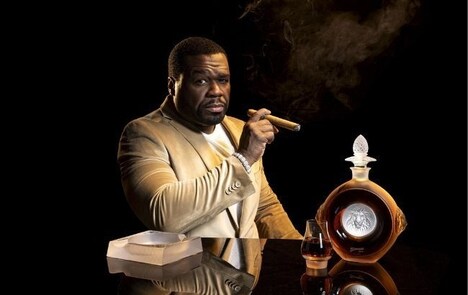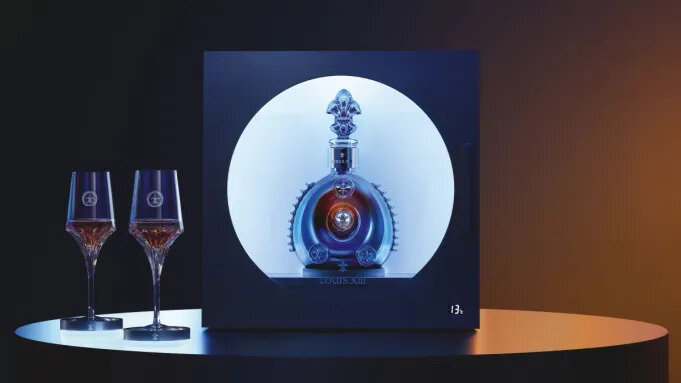
Louis XIII created the Black Pearl edition, a blend of very old eaux-de-vie from Grande Champagne presented in a sculptural decanter that comes housed inside an individual cooling cellar. The cooling cellar is a backlit mini fridge engineered to keep the cognac at exactly 55.4°F, a temperature tied to the Le Grollet maturation tierçon used in the blend.
Cellar master Baptiste Loiseau selected a heart eaux-de-vie from a demijohn originally filled by Pierrette Trichet and spent four years assembling the combination that reproduces Le Grollet’s aromatic profile. The release is limited to 398 decanters and pairs the crystal vessel with the temperature-controlled unit as a single set priced at $28,000.
On the palate the spirit is described as cool and floral, with rose and lavender plus tannin, spice, fruit, leather and cigar notes that evolve as the liquid warms in the glass. The cooling cellar frames tasting as a temperature journey and offers collectors a precise serving ritual tied to a specific cellar condition.
Image Credit: Louis XIII
What's Driving This Trend
- Temperature-controlled Luxury
- Precision climate systems are becoming part of premium product design, creating room for sensory consistency, ritualized ownership, and high-margin collectible experiences.
- Heritage-linked Hardware
- Luxury brands are pairing archival provenance with engineered accessories, where physical technology reinforces storytelling around origin, craft, and rarity.
- Ritualized Tasting Experiences
- Curated serving conditions are transforming spirits consumption into a staged journey, opening opportunities around guided flavor evolution and personalized connoisseurship.
Who This Affects Most
- Luxury Spirits
- Ultra-premium liquor producers can differentiate limited releases through integrated serving systems that make rarity feel more measurable and experiential.
- Premium Home Appliances
- Compact cooling and preservation devices are gaining relevance as lifestyle objects, especially when designed for collectors and tailored to specific products.
- Experiential Retail
- High-end retail environments can use controlled sensory demonstrations to turn product education into immersive proof of craftsmanship and exclusivity.