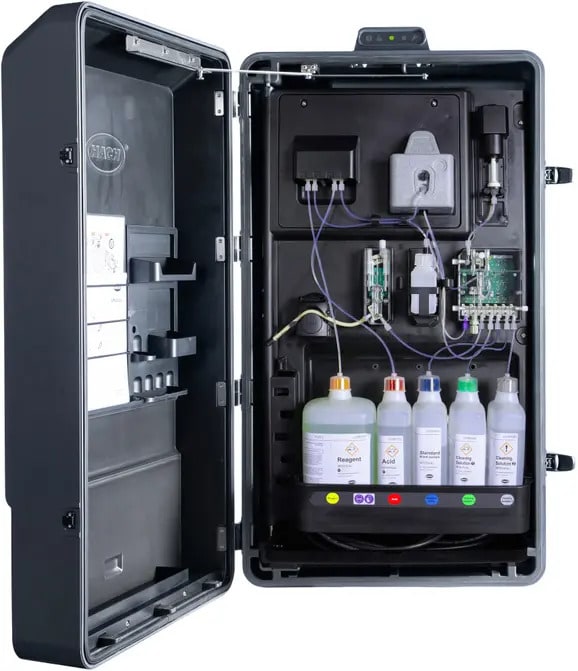
Hach's NP6000sc Phosphate Analyzer is an advanced nutrient monitoring system designed for water treatment facilities. This innovation directly addresses common operational frustrations, including equipment downtime, frequent maintenance, and the pressure to maintain strict regulatory compliance.
Hach's advanced nutrient monitoring system extends the cleaning frequency from once a month to once every three months and features front-facing reagent bottles, which eliminate the need to handle sensitive internal components during routine changes. It also includes an enhanced grab sample feature that aligns online measurements with lab results — a critical function for facilities aiming to maintain audit-ready records and consistent process control.
Hach's NP6000sc Phosphate Analyzer specifically targets water treatment professionals, who would be drawn to this product because it promises to significantly reduce the hands-on time their staff must dedicate to equipment upkeep.
Image Credit: Hach
Key Themes Behind This Trend
- Automated Nutrient Monitoring
- Continuous in-line analyzers that reduce manual sampling create potential to shift operator roles toward oversight and data interpretation rather than routine maintenance.
- Maintenance-free Component Design
- Front-access reagent cartridges and extended cleaning intervals suggest a move toward modular, low-touch hardware that minimizes downtime and spare-part inventories.
- Lab-integrated Online Analysis
- Enhanced grab-sample alignment between online sensors and laboratory results indicates opportunities for systems that deliver audit-ready data streams and tighter regulatory traceability.
Where This Applies
- Municipal Water Treatment
- Public utilities stand to benefit from analyzers that lower staff workload and improve compliance reporting through more reliable, hands-off nutrient measurement.
- Industrial Wastewater Management
- Manufacturing and process facilities could see cost reductions and process stability gains from analyzers that reduce maintenance frequency and enhance real-time monitoring.
- Environmental Monitoring Services
- Third-party labs and monitoring firms may expand service offerings by incorporating field-grade, lab-correlated sensors that support remote auditing and long-term data integrity.