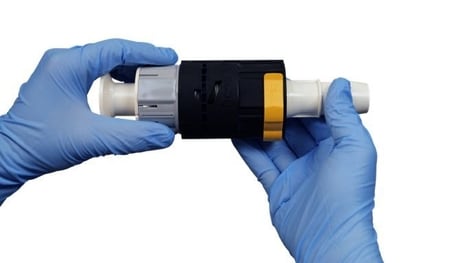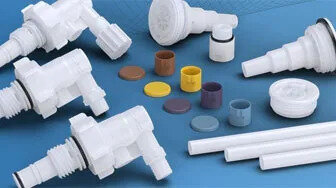
CPC’s ‘DripFree Series’ replaces the lubricated O-rings common in quick disconnects with a lubrication-free valve for commercial inkjet printer lines. This change lets service teams fill and disconnect lines with less risk of contaminants entering the flow path and degrading print quality.
Non-spill valves curb leaks after separation and limit air from entering the line during hookup, reducing foaming in the ink path. The first size, ‘DripFree DF2,’ is built for tight printer layouts. Its 1/8-inch flow format keeps spillage below 0.05 mL per disconnect. Assembly in an ISO Class 8 cleanroom reduces particulates, and the line made its trade show debut at Las Vegas’ ‘PRINTING United Expo.’
A lubrication-free valve turns a routine maintenance part into a print-quality control point, giving commercial print shops one less contamination source to manage. The low-spill format shifts B2B connector buying toward hardware that reduces ink waste and cleanup time at once.
Image Credit: CPC
Key Themes Behind This Trend
- Lubrication-free Connectors
- Clean valve architectures reduce contamination risks in fluid systems, creating room for maintenance components that double as quality-control safeguards.
- Low-spill Fluid Handling
- Precision disconnect hardware minimizes leakage and waste, reshaping expectations for cleaner servicing in high-throughput production environments.
- Compact Cleanroom Components
- Small-format assemblies made under controlled conditions support tighter machine layouts while improving reliability in contamination-sensitive workflows.
Where This Applies
- Commercial Printing
- Inkjet operators benefit from cleaner fluid pathways that protect output consistency and reduce downtime tied to service-related contamination.
- Industrial Components
- Connector manufacturers can differentiate routine fittings through integrated leak prevention, air reduction, and cleanliness-focused design.
- Fluid Management
- B2B fluid systems are evolving toward hardware that limits waste, prevents ingress, and improves maintenance efficiency across specialized equipment.