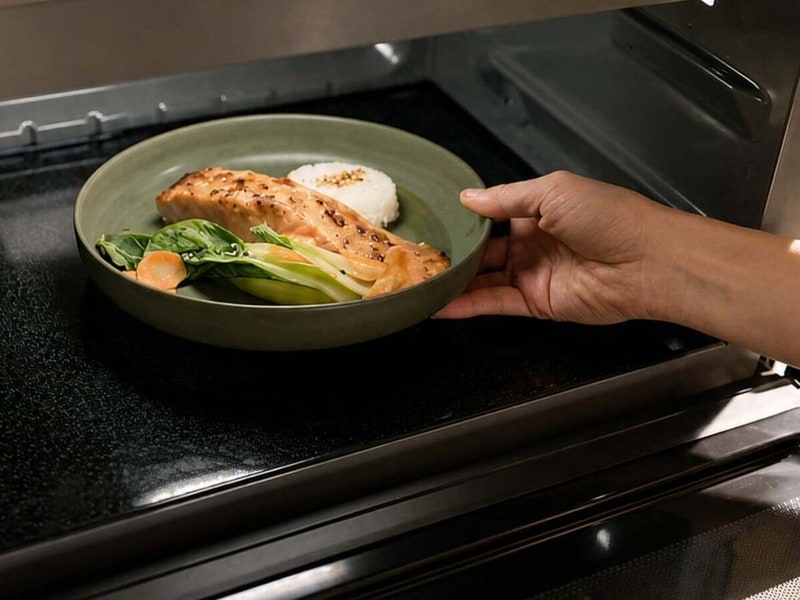
Panasonic NN-SF57RM is a countertop microwave that replaces several conventional microwave components with a redesigned cooking system and oven-inspired form. The appliance features a drop-down door with soft-close hinges instead of the typical side-opening design. A graphite finish, compact control panel and flat-front appearance give it a look closer to a built-in oven than a traditional microwave. The interior provides 1.0 cubic feet of capacity and removes the rotating glass turntable in favor of a flat cooking surface.
A concealed antenna beneath the cavity floor distributes microwave energy throughout the chamber, eliminating the need for a spinning plate. Panasonic pairs this system with its Inverter Technology, which delivers continuous power rather than cycling on and off during cooking. The microwave also incorporates Genius Sensor 2.0, a temperature-monitoring system that uses 64 sensing points and measures surface temperatures every 0.1 second to adjust cooking performance automatically.
Image Credit: Panasonic
What's Driving This Trend
- Turntable-free Microwaves
- Flatbed cavities create room for cookware flexibility and simpler cleaning, signaling premium upgrades in a category long defined by rotating plates.
- Sensor-driven Heating
- Continuous power delivery and dense temperature sensing transform reheating into a more automated precision experience with fewer cold spots and overcooked edges.
- Built-in Countertop Design
- Oven-like doors, graphite finishes and flush control panels blur the boundary between portable appliances and integrated kitchen architecture.
Who This Affects Most
- Home Appliances
- Microwave redesigns centered on flat interiors, inverter systems and automated sensing reveal new differentiation paths for mature countertop appliance segments.
- Kitchen Design
- Compact products with built-in visual cues support smaller kitchens and renovation-light upgrades where aesthetic continuity matters as much as cooking performance.
- Consumer Electronics
- Embedded sensors and adaptive power systems extend software-like intelligence into everyday cooking devices, creating space for connected diagnostics and performance personalization.