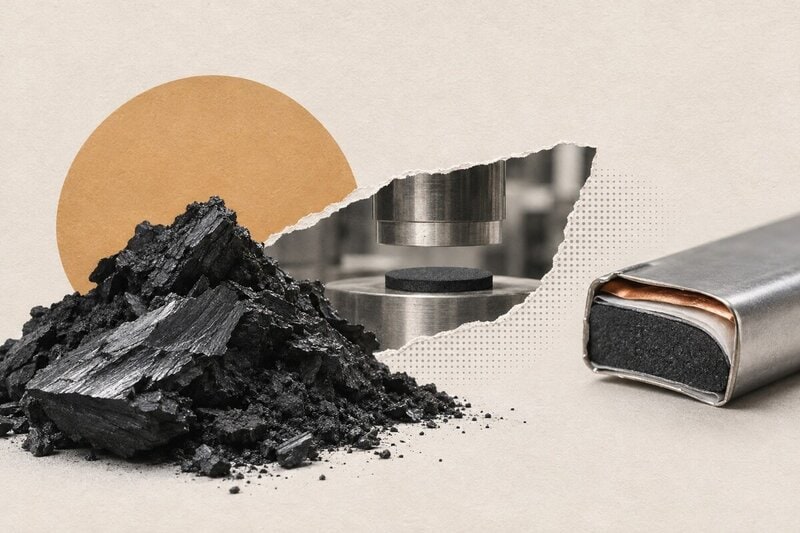
Molten Industries is bringing battery makers a U.S. graphite source through an Oakland demonstration factory that converts methane into anode material for lithium-ion batteries, aiming to reduce dependence on Chinese supply. Its process uses electrical resistance heating to split natural gas into carbon for graphite and hydrogen, which is sold separately, and uses three times less electricity than existing methods, the company says.
In Oakland, the plant is set to produce 300 metric tons a year, enough for about 4,300 EVs, the company says. Most of the graphite goes to undisclosed customers testing it in battery cells, while the hydrogen stream goes to a neighboring buyer.
Molten Industries shows how a process that makes graphite and hydrogen from natural gas can give U.S. battery manufacturers a domestic supplier, with price parity against Chinese graphite after tariffs, the company says.
Image Credit: AI-generated
What Makes This Trend Stand Out
- Methane-derived Battery Graphite
- Natural gas conversion into anode-grade graphite creates a lower-electricity pathway for domestic battery materials that could reshape supply economics for EV manufacturers.
- Co-produced Clean Hydrogen
- Hydrogen generated alongside graphite introduces an additional revenue stream that can improve plant economics while serving nearby industrial energy demand.
- Localized Anode Supply Chains
- Domestic graphite production reduces exposure to overseas concentration and tariff volatility, opening new models for regional battery manufacturing resilience.
Sectors Adopting This
- Battery Materials
- Anode producers gain access to alternative graphite sources that may compete with imported supply on cost, traceability, and energy intensity.
- Electric Vehicles
- EV manufacturers benefit from localized inputs that support supply security and potentially lower lifecycle emissions for lithium-ion battery packs.
- Industrial Hydrogen
- Nearby buyers of hydrogen can anchor distributed production hubs where byproducts from materials manufacturing support cleaner industrial operations.