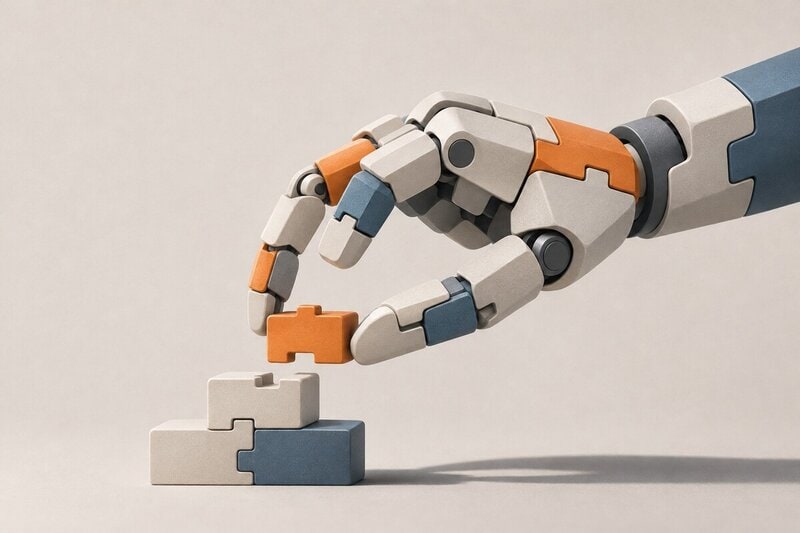
FFR expanded ‘Brain Blocks’, a visual robot programming tool on its Developer Platform, with an AI module that lets developers and beginners build perception-based behaviors without writing code. The update also adds motion recording and playback, so users can capture movements and reuse them inside block-based workflows instead of scripting them.
The module can detect gestures, body poses, objects and sounds, then use those signals in programs for physical AI robots. Brain Blocks is one of six development tools on the platform, and the added perception layer gives education and research teams a visual way to prototype robot actions and responses.
FFR shows how no-code perception and motion playback can turn robot programming into more of a prosumer task, with drag-and-drop logic handling work that needs specialist coding, widening who can build and test robot skills on a platform used in education and research.
Why This Trend Is Growing
- No-code Robotics
- Visual programming interfaces are lowering technical barriers in robotics, creating space for faster prototyping, broader creator participation and new prosumer automation tools.
- Perception-based Automation
- AI modules that interpret gestures, poses, objects and sounds are expanding how robots respond to real-world context in education, research and commercial environments.
- Motion Playback Workflows
- Recorded movement reuse is reshaping robot skill development by turning physical demonstrations into programmable behaviors without traditional scripting complexity.
Industries Being Reshaped
- Educational Technology
- Classroom-ready robotics platforms with drag-and-drop AI capabilities are enabling more accessible STEM learning models and hands-on experimentation.
- Robotics
- Development ecosystems that combine visual logic, perception tools and reusable motion data are redefining how robot capabilities are created and deployed.
- Research Tools
- Low-code and no-code robot programming environments are giving academic teams quicker ways to test embodied AI concepts and interactive machine behaviors.