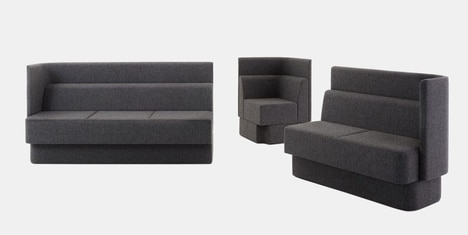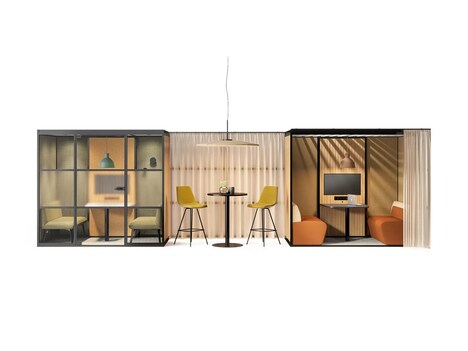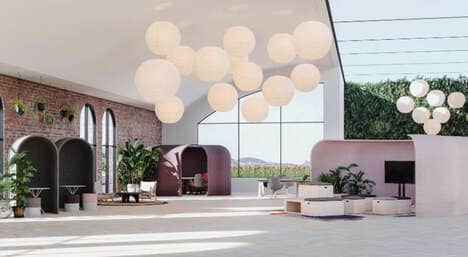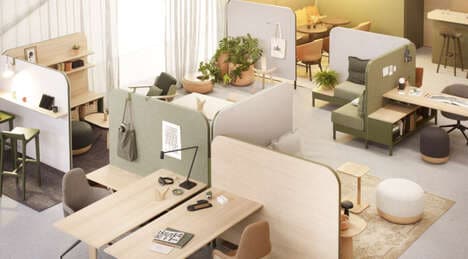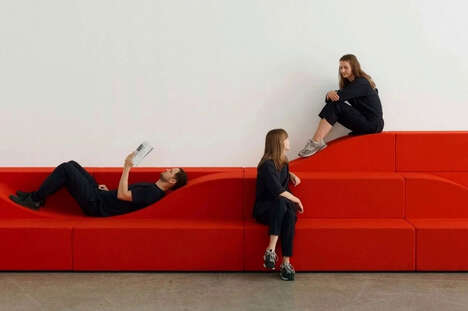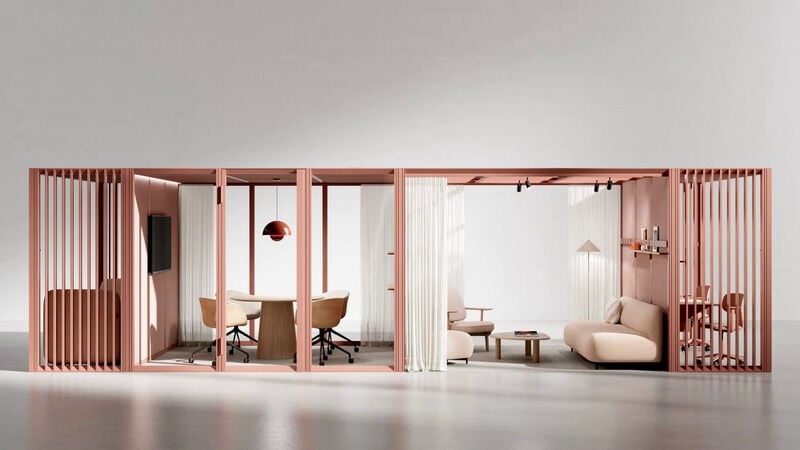
Office brand Mute has unveiled a look at its Mute Modular system, which is a workplace configuration development to adapt to the nature of different office structures. The modular rooms cater to the changes to allow architects to form different areas including large or small-sized conference rooms, lounge spaces, coffee points, soundproof areas, and more. This has full freedom to configure a space and pay attention to the various arrangements and sizes of an environment.
CEO of Mute, Szymon Rychlik, shares, "Each modular room is built of prefabricated, interchangeable wall modules linked with a click-in system. Investors can reconfigure it easily – expand it, change its length or width, or even divide it into two smaller units, making sure the office space responds to their current needs – and save resources usually spent on costly refurbishments. This true modularity distinguishes our system from other products on the market, and we wanted to reflect that."
Image Credit: Mute
What's Driving This Trend
- Modular Workspaces
- The emergence of fully customizable modular rooms addresses the dynamic needs of modern office environments.
- Interchangeable Wall Systems
- The use of prefabricated, click-in wall modules offers a versatile solution to quickly reconfigure office spaces.
- Resource-efficient Office Design
- The capability to reconfigure office layouts without significant refurbishment saves resources and reduces costs.
Who This Affects Most
- Office Furniture Manufacturing
- Companies can innovate by incorporating modular and interchangeable designs into their product lines.
- Architectural Services
- Architects can offer more adaptable and customizable office design solutions using modular systems.
- Real Estate Development
- Real estate developers can provide flexible office solutions that cater to the evolving needs of tenants.