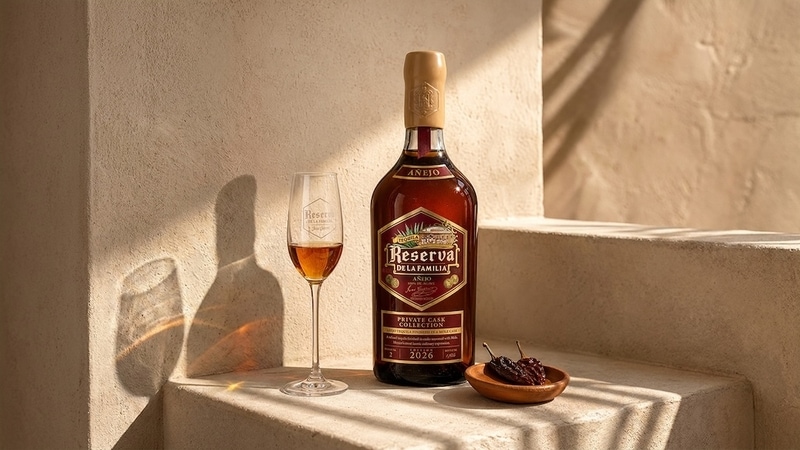
Mole and tequila are more than food and drink in Mexico, and Reserva de la Familia Tequila's Private Cask Collection Edition No. 2: Mole Cask acknowledges their role in the country's identity, centuries of tradition, regional pride, and craft with the world’s first tequila finished in mole-seasoned barrels.
The limited-edition Añejo is hand-crafted in small batches in the world's oldest tequila distillery, La Rojeña, beginning with 100% Blue Weber agave. Following slow-roasting, fermenting with proprietary yeast and double distillation, the tequila ages in New American and French oak barrels before finishing for three to four months in red Oaxaca mole-seasoned medium-toast new American oak barrels. The result is said to yield a balanced bitter and sweet profile, a spicy mouth sensation, and sweet notes of oak and cacao.
Through exclusive tastings and a one-of-a-kind seven MICHELIN Starred dining experience, the Private Cask Collection Edition No. 2: Mole Cask was previewed at Tales of the Cocktail in New Orleans.
What Makes This Trend Stand Out
- Culinary-cask Spirits
- Food-seasoned barrels introduce a new layer of flavor provenance, allowing premium spirits to merge culinary heritage with experimental aging techniques.
- Heritage-driven Flavor Fusion
- Regional ingredients and traditional recipes are becoming luxury flavor markers, creating space for culturally rooted products with global collectible appeal.
- Experiential Spirits Launches
- Michelin-level tastings and exclusive previews elevate limited releases into immersive cultural events that deepen consumer attachment beyond the bottle.
Sectors Adopting This
- Premium Spirits
- Small-batch finishing methods tied to distinctive culinary traditions can expand differentiation in crowded luxury tequila and aged spirits markets.
- Fine Dining
- Chef-led pairings with experimental spirits position restaurants as cultural storytelling venues where beverage innovation becomes part of the tasting menu.
- Food and Beverage Tourism
- Destination tastings centered on regional identity can connect travelers with craft production, local cuisine, and exclusive product discovery.