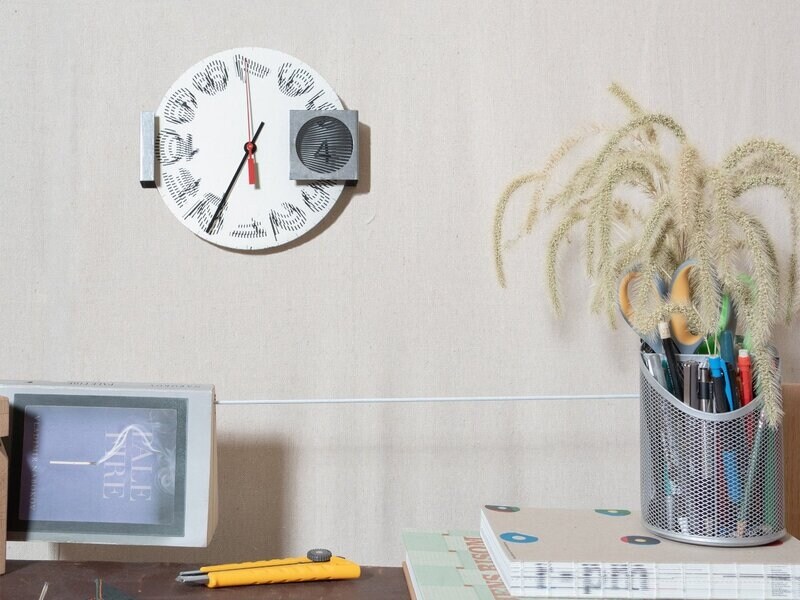
The Moiré Clock reinterprets how time is seen by using overlapping printed discs that create the illusion of shifting movement. As the inner disc rotates behind a striped front layer, hour numerals emerge and fade through moiré patterns, making time appear and disappear instead of being marked by a traditional hand. The mechanism transforms simple motion into an optical experience that feels both mechanical and poetic.
It is constructed with a steel housing and fine paper face, the clock balances minimal form with intricate visual rhythm. The minute and second hands remain visible for orientation, while the animated hours introduce a sense of discovery with each passing moment. At roughly eight inches wide, the piece functions as both a precise timekeeper and a kinetic artwork, blending craftsmanship, illusion, and design into one quietly hypnotic object.
Image Credit: STATION Design
Key Themes Behind This Trend
- Kinetic Timepieces
- Kinetic timepieces transform traditional time-telling into dynamic art by integrating movement and optical illusions.
- Illusory Design Elements
- Integrating moiré patterns into product design offers an opportunity to explore new visual experiences that captivate and engage users.
- Artistic Utility Objects
- Objects that serve dual purposes as both utility items and art pieces redefine home decor by merging functionality with aesthetic value.
Where This Applies
- Home Decor and Furnishings
- The integration of kinetic and illusory elements in home decor items presents opportunities to create unique and engaging interior designs.
- Art and Design
- Artists and designers can explore the integration of moiré and kinetic mechanisms to expand the boundaries of visual art and functional design.
- Horology
- Innovative approaches to clock design challenge traditional horology by incorporating optical effects that transform timekeeping into an experiential art form.