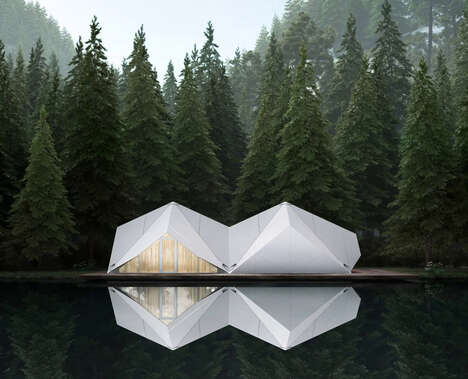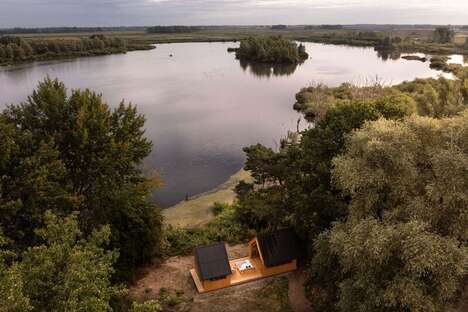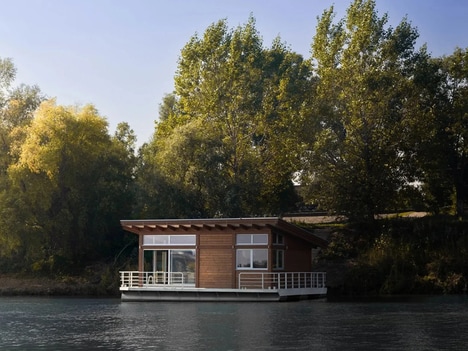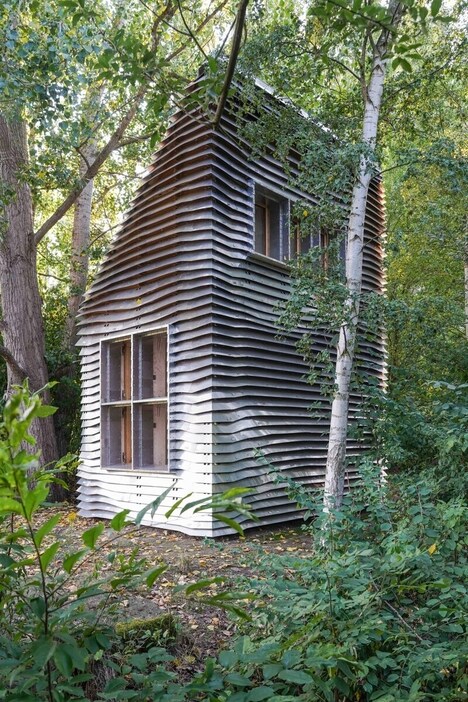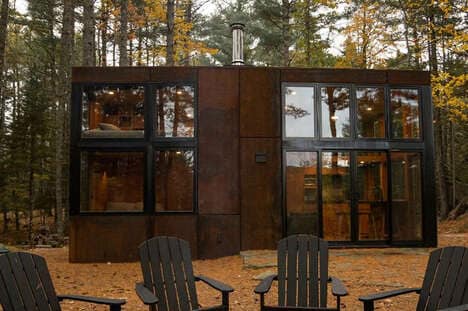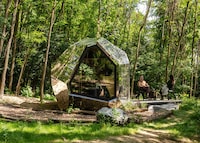
The Namety Cabins, designed by Roman & Dmytro Seliuk, present an innovative approach to modular hospitality architecture that blends childhood nostalgia with contemporary design. Situated in a wooded park area near Kyiv, these compact structures draw inspiration from the simple shelters and tents of youth.
The modular hospitality architecture project employs a flexible system of prefabricated modules, each serving a single function — sleeping, bathing, or living — that can be combined in various configurations to suit different site conditions. Transparent glass connectors between units create fluid transitions while maintaining visual continuity with the surrounding forest. The exterior combines light-reflective surfaces with a corten steel mesh shell, giving the cabins a dynamic presence that shifts with daylight and seasons.
This project would particularly appeal to travelers seeking unique, nature-immersive accommodations that balance simplicity with thoughtful design.
Image Credit: Dmytro Seliuk
What's Driving This Trend
- Modular Flexibility in Hospitality
- The shift towards fully modular accommodations introduces a new level of customization and adaptability in architectural design, enabling bespoke layouts that cater to diverse environmental and customer needs.
- Nature-integrated Lodging
- Emerging demand for hotels that offer deep immersion into natural surroundings is driving innovations that blend architecture seamlessly with the environment, enhancing guest experiences.
- Transparent Multi-functional Spaces
- Architectural designs utilizing transparent materials to create continuity and fluid transitions between interiors and natural exteriors are redefining spatial concepts in hospitality.
Who This Affects Most
- Eco-tourism
- Eco-tourism is evolving with projects like integrative modular cabins that provide environmentally conscious travelers with sustainable yet comfortable lodging options.
- Prefabricated Construction
- The rise of prefabricated components in construction allows for efficient, scalable solutions in complex structures such as customized hospitality accommodations.
- Architectural Design
- Advancements in modular and transparent architectural designs are reshaping the way structures interact with their surroundings, offering new aesthetics and functional integration.