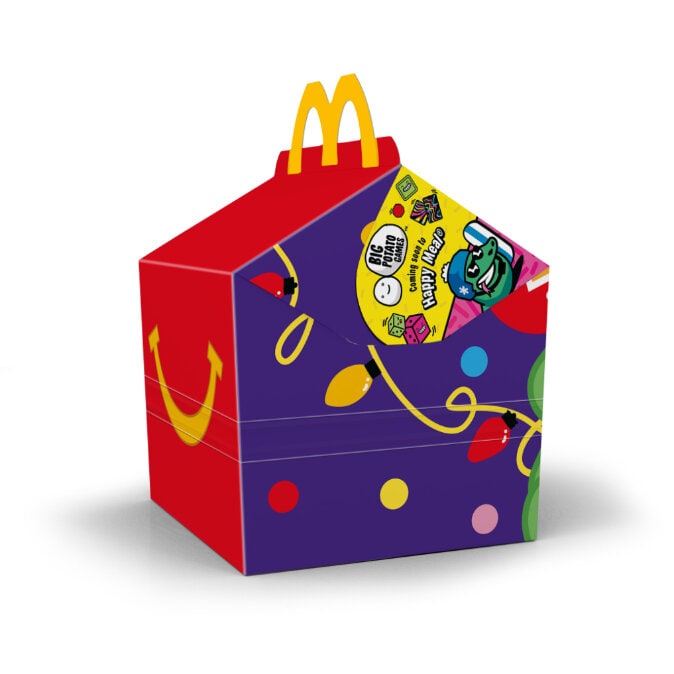
Big Potato Games is bringing nine mini games to McDonald’s Happy Meals in the U.K. and Ireland, including two titles created only for this run. The games are built for families, with fast play that keeps parents and children involved instead of waiting through long turns.
The set includes smaller versions of ‘OK Play’ and ‘Herd Mentality,’ the latter of which has sold 3 million copies worldwide. Each game also has a QR code that opens a how-to-play video, helping families start quickly. Participating restaurants begin offering the games Dec. 29, 2026. The promotion runs through Feb. 1, 2027.
Happy Meal placement turns a restaurant toy into an at-home play prompt and widens Big Potato Games’ reach with families who may not already buy tabletop games. QR video support also suits a quick-service setting, where easy pickup and immediate use matter as much as the item itself.
Image Credit: Toy World Magazine
Key Themes Behind This Trend
- Miniature Tabletop Play
- Compact versions of popular games create low-friction entry points for families, revealing potential for bite-sized entertainment formats that bridge restaurant visits and at-home routines.
- Qr-guided Onboarding
- Embedded video instructions reduce setup barriers in casual play, suggesting new value in physical products that pair instantly with digital guidance.
- Meal-based Entertainment
- Fast-food promotions are evolving from collectible toys into interactive family experiences, opening space for branded play ecosystems tied to everyday dining occasions.
Where This Applies
- Quick-service Restaurants
- Restaurant chains can extend customer engagement beyond the meal by integrating usable entertainment items that travel into household leisure time.
- Board Games
- Tabletop publishers gain broader discovery channels through mass-market partnerships that repackage family titles for impulse-friendly distribution.
- Family Entertainment
- Shared, fast-play formats reflect demand for inclusive activities that keep both adults and children engaged without long learning curves.