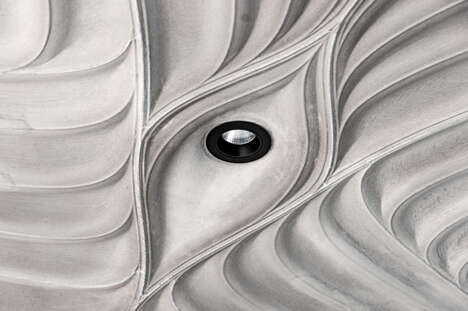
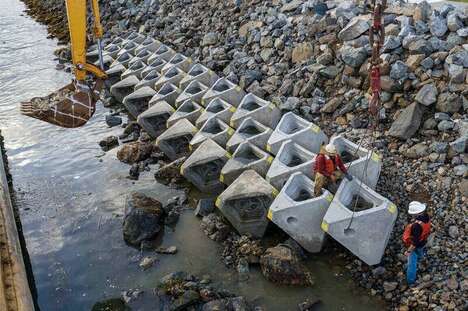
The discovery of concrete allowed for a drastic reduction in building costs compared to its predecessor, brick, however, before 'Mesh Mould Metal,' concrete could only be molded into relatively regular shapes for use in load-bearing buildings. With Mesh Mould Metal, though, Gramazio Kohler Research has created a system that gives architects far more flexibility in designing concrete structures.
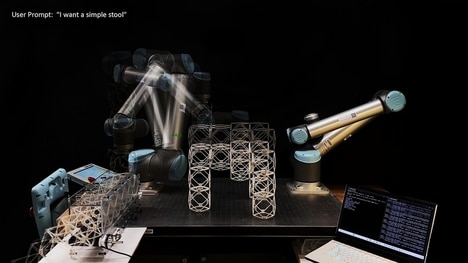
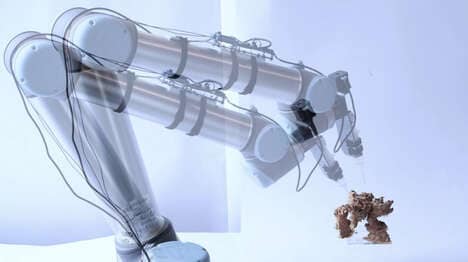
The system uses a robotic extrusion process to construct a polymer mesh that can house concrete. Through research into how concrete binds, the Mesh Mould Metal system's polymer mesh is shaped in order to maximize the load-bearing capacity of concrete that sets around it. As such, architects can input complex, irregular shapes into the robotic process and remain confident that the completed concrete slab will have structural integrity.
Why This Trend Is Growing
- Robotic Concrete Molding
- The Mesh Mould Metal robotic system enables architects to input complex, irregular shapes into the robotic process for concrete molding.
- Flexible Concrete Shaping
- The Mesh Mould Metal system gives architects far more flexibility in designing concrete structures and allows for more complex and irregular shapes.
- Load-bearing Polymer Mesh
- The Mesh Mould Metal system's polymer mesh is shaped in order to maximize the load-bearing capacity of concrete that sets around it, offering improvements in structural integrity.
Industries Being Reshaped
- Construction
- The construction industry can benefit from the innovative Mesh Mould Metal system as it allows for more creative and complex concrete building designs.
- Architecture
- Architects can take advantage of the Mesh Mould Metal system to design unique concrete structures with greater flexibility and structural integrity.
- Robotics
- The Mesh Mould Metal system highlights innovative opportunities in robotics for concrete construction, offering potential for future automation in the industry.