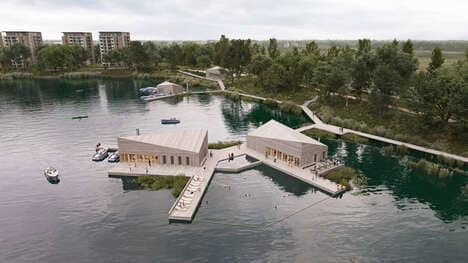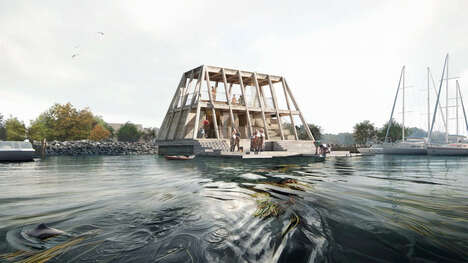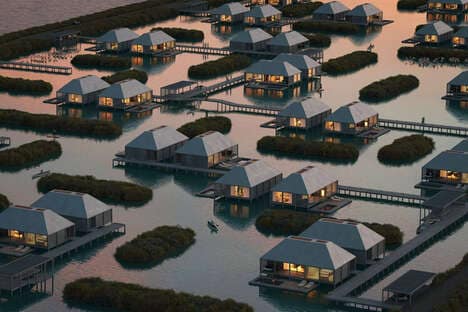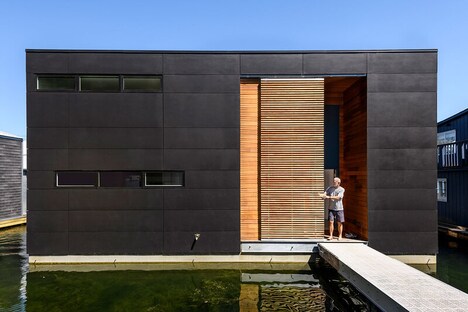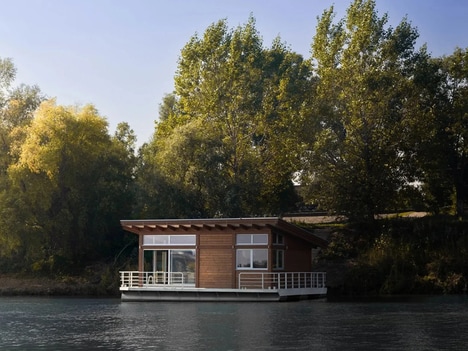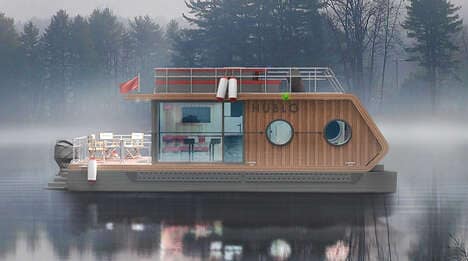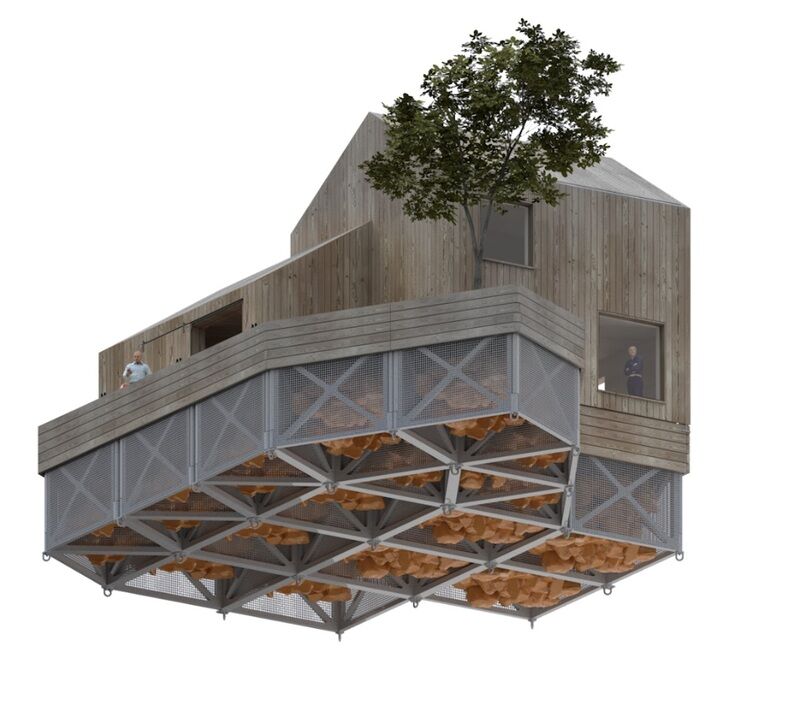
Danish maritime architectural brand MAST presents a look at its new conceptual sustainable infrastructure that rests on bodies of water. It is the Land on Water project that features floating modular buildings and homes that are connected together to create communities along lagoons and oceans throughout the globe.
To assemble these together, it uses gabion cages in a traditional construction in order to assist with the floating capabilities. The Gabion cages are ancient tools that depend on mesh wiring to hold together rubble and earth as the foundation of a building. The mesh cages are reimagined with local upcycled floatation support including gathering old plastic bottles and recycled buoys to ensure that the units stay above the water.
Image Credit: MAST
What's Driving This Trend
- Modular Floating Homes
- The use of modular construction to create eco-friendly homes that float on water presents an opportunity for sustainable and affordable housing solutions.
- Upcycled Materials
- Employing recycled materials such as old plastic bottles and buoys is a trend that promotes sustainability while also reducing costs.
- Water-based Communities
- The trend towards building water-based communities using floating modular homes presents a disruptive innovation opportunity for urban planners and developers.
Who This Affects Most
- Architecture
- The architecture industry can adopt the trend of using modular, eco-friendly and floating homes to offer new and sustainable housing solutions.
- Construction
- The trend of using upcycled and locally sourced materials in construction provides opportunities for the construction industry to reduce costs and promote sustainability.
- Real Estate Development
- Developers can explore the trend of building water-based communities using modular homes to provide unique and eco-friendly living experiences for residents.