
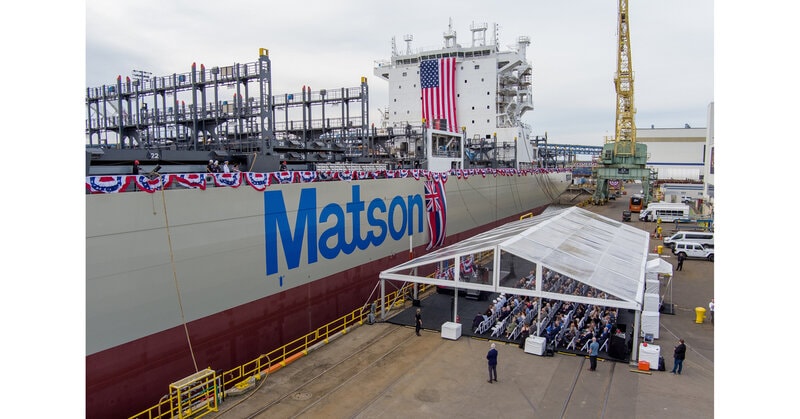
Matson is expanding its fleet with LNG-ready cargo ships designed to improve fuel flexibility and shipping efficiency. Its newest Aloha Class vessel, Makua, features dual-fuel engines capable of operating on liquefied natural gas or conventional marine fuels. Unlike earlier vessels that required modifications for LNG use, Makua will arrive equipped for both options.
Built at Hanwha Philly Shipyard, the containership incorporates a fuel-efficient hull, double-hull fuel tanks, and freshwater ballast systems. Measuring 850 feet with capacity for 3,600 containers, Makua is scheduled for delivery in early 2027. Two additional vessels will follow through 2028.
For shipping operators, these upgrades offer greater operational flexibility while supporting reliable cargo transportation. Matson's approximately $1 billion investment will replace three existing ships, expand capacity across its Hawaii and China–Long Beach Express services, and support American shipbuilding employment.
Image Credit: Matson, Inc.
Why This Trend Is Growing
- Dual-fuel Shipping
- Flexible propulsion systems create new pathways for carriers to balance fuel availability, cost volatility, and emissions expectations across long-distance trade routes.
- Lng-ready Fleets
- Vessels built with LNG capability from launch indicate a shift toward future-proof marine assets that can adapt as fuel infrastructure and regulations evolve.
- Efficient Hull Design
- Advanced hull engineering supports lower fuel consumption and improved cargo economics, opening space for performance-driven differentiation in commercial shipping.
Industries Being Reshaped
- Maritime Shipping
- Fleet modernization centered on alternative-fuel readiness reshapes how operators plan capacity, compliance, and service reliability.
- Shipbuilding
- Demand for complex dual-fuel vessels strengthens opportunities for domestic yards with expertise in advanced propulsion, tank integration, and efficient vessel construction.
- Clean Energy Infrastructure
- Growth in LNG-capable cargo ships expands the relevance of port fueling networks, storage systems, and marine energy supply partnerships.