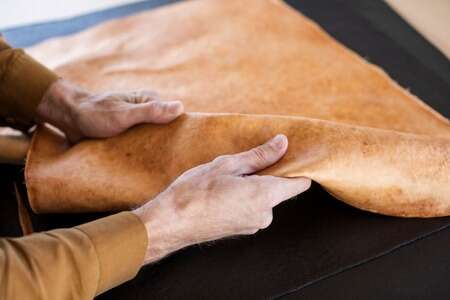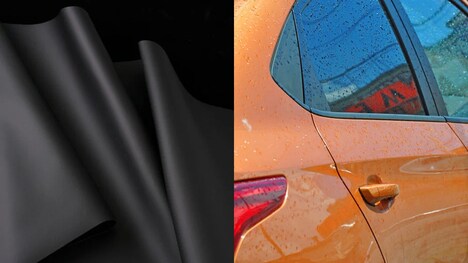


Beyond Leather is a Copenhagen-based company behind Leap. Made from a combination of leftovers from apple juice and cider production and natural rubber, Leap is a plant-based leather alternative. This cruelty-free product joins a cohort of biomaterials designed to mimic animal leather and mitigate environmental footprints.
The apple and rubber mix is applied to a textile backing made of cotton and wood fiber to achieve the desired leather-mimicking texture. It is then finished with a protective coating. This three-layered structure can be disassembled at the end of the material's life cycle to be disposed of properly. While a full life cycle assessment is yet to be undertaken, apple-based leather emits 85% less CO2 during its production than traditional leather.
Image Credit: Dezeen / Beyond Leather
Why This Trend Is Growing
- Sustainable Alternatives to Leather
- There is an ongoing trend towards biomaterials designed to mimic animal leather and reduce environmental footprints, creating disruptive innovation opportunities in the fashion and accessories industries.
- Circular Economy for Textile Waste
- Disassembling three-layered structures like Leap's offers opportunities for circularity within the textile industry, reducing the waste generated and lowering emissions from production.
- Plant-based Innovation
- The emergence of plant-based alternatives like Leap for leather and other traditionally animal-sourced materials encourages disruptive innovation in the agricultural and food industries, as well as fast fashion and luxury brands.
Industries Being Reshaped
- Fashion
- Sustainable alternatives to animal leather like Leap create disruptive innovation opportunities in the fashion industry, where conscious consumerism is on the rise.
- Textile
- The disassemblable nature of Leap's three-layered structure creates an opportunity for a circular economy within the textile industry, minimizing waste and emissions.
- Agriculture
- Plant-based innovations like Leap present opportunities for disruptive innovation in the agricultural industry, creating new uses for agricultural waste products and promoting sustainability.