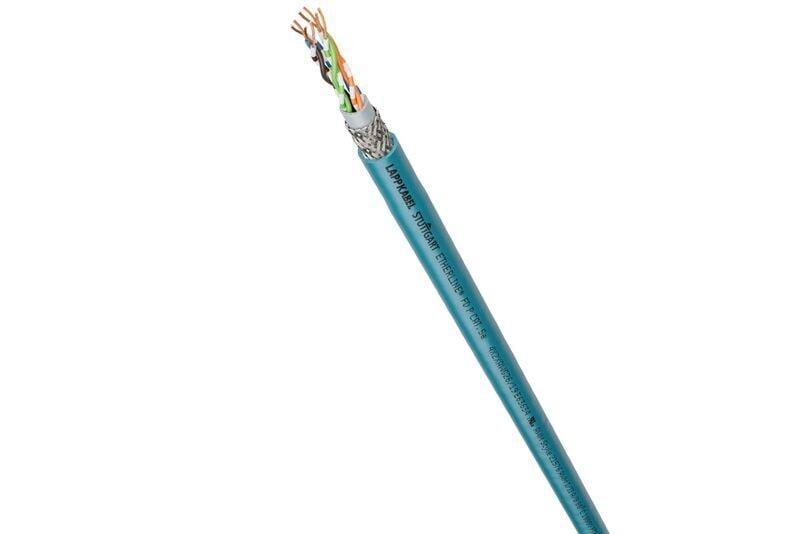
LAPP has proudly announced the commencement of series production for its pioneering bio-cable, heralding a new era of sustainable technological advancements. This innovative product features an outer sheath made from 43% renewable raw materials, setting a new benchmark for eco-friendly design in the industry. The data cable incorporates a sheath partially derived from bio-based sources, ensuring that it matches the high-performance standards of traditional wires.
By integrating renewable raw materials, LAPP has achieved a remarkable 24% reduction in the carbon footprint of the cable's sheath compared to conventional fossil-based TPU alternatives.
The bio-cable is poised to meet the growing demand for sustainable products without compromising quality or durability. It also features a halogen-free construction made from flame-retardant materials to prevent fire hazards.
Image Credit: LAPP
Key Themes Behind This Trend
- Eco-friendly Technology
- The debut of LAPP's bio-cable underlines an industry shift towards electronics made from sustainable materials.
- Carbon Footprint Reduction
- LAPP's innovative use of bio-based raw materials results in a significant 24% reduction in carbon emissions compared to traditional techniques.
- Halogen-free Construction
- By incorporating halogen-free, flame-retardant materials, LAPP ensures both sustainability and enhanced safety in its products.
Where This Applies
- Electronics Manufacturing
- The introduction of renewable raw materials in data cables marks a transformative step in the electronics manufacturing sector.
- Renewable Materials
- The bio-cable highlights the potential of renewable resources to replace fossil-based counterparts in various applications.
- Sustainable Fire Safety
- Utilizing flame-retardant and halogen-free materials signifies a growing trend in the fire safety industry towards greener solutions.