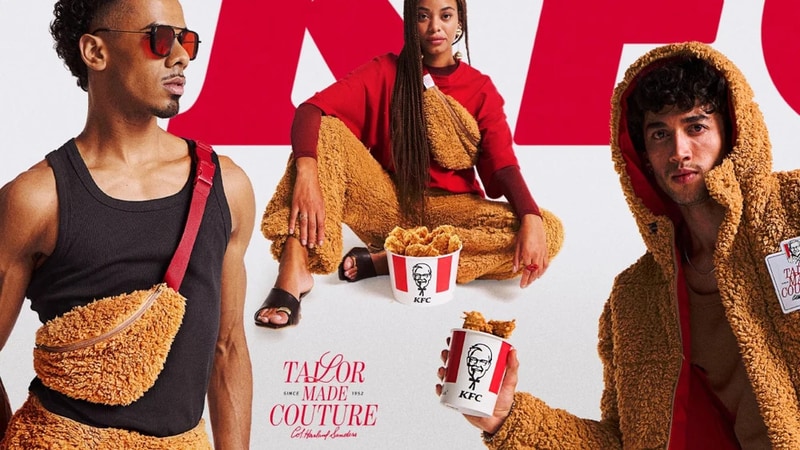
The 'KFC Tailor Made Couture' campaign transforms the brand’s signature crispy coating into a tactile design language applied to everyday garments and accessories. Developed with LolaTBWA in Brazil, the activation invites customers to bring personal items such as jackets, hats, jeans, and bags to a participating store, where they are reworked with a textured finish inspired by fried chicken breading. Participation is unlocked through purchase, linking the customization process directly to the core product experience.
The customization process uses sherpa fabric and hand-sewn techniques to replicate the uneven, layered surface of KFC’s coating, translating a food-based visual identity into material form. Items are collected, treated, and returned over several weeks, emphasizing craft and exclusivity rather than mass production. The project launched during São Paulo Design Week with an installation styled as an atelier.
Image Credit: KFC Brazil
Key Themes Behind This Trend
- Food-inspired Fashion
- Aesthetic translation of culinary textures into fabrics reveals new sensory design languages that could redefine brand-driven apparel and limited-edition collections.
- Experiential Brand Customization
- Customization tied directly to product purchase fosters immersive, reward-linked experiences that blur the line between consumption and personalized craftsmanship.
- Craft-based Upcycling
- Hand-sewn, atelier-style rework of consumer items highlights artisanal upcycling as a premium alternative to mass production with potential for high-margin niche services.
Where This Applies
- Fashion Retail
- Retailers could leverage tactile, narrative-driven garments to create differentiated in-store activations and exclusive product drops that elevate brand loyalty.
- Quick-service Restaurants
- QSR brands experimenting with tangible extensions of their visual identity point toward new revenue streams and deeper customer engagement beyond food sales.
- Textile Manufacturing
- Material innovation adapting unconventional textures like food breading indicates opportunities for specialty fabrics and novel treatment processes that serve experiential designers.