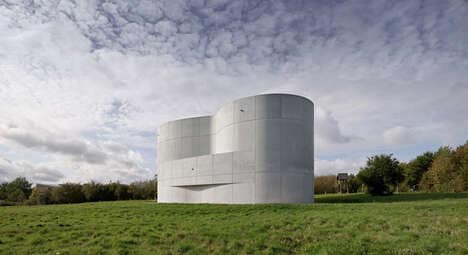
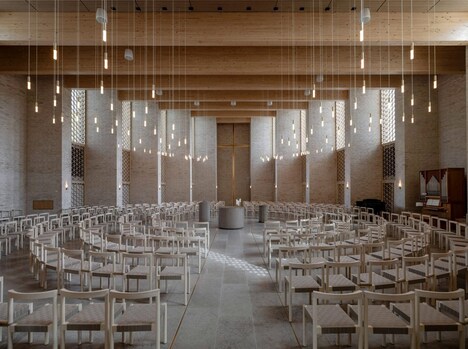
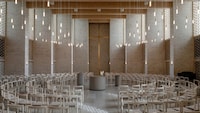
JAJA Architects, a Danish firm, recently won a competition to design and build a new parish church in the Syndhavnen district of Copenhagen, marking the first new church to be built in the Danish capital in 27 years. The winning design features a white facade with stacked volumes that decrease concentrically in size and that have slight, almost imperceptible slants along their horizontal lines.
The slant of JAJA Architects' design has a function beyond its interesting aesthetic. The gradually canted floors allow the entire church to be devoid of steps. This means that, on a pragmatic level, the building will be completely wheelchair-friendly. Further, from the perspective of artistic meaning, the continuous ramp symbolizes ascension.
Why This Trend Is Growing
- Accessible Architecture
- The use of gradually canted floors in building design creates wheelchair-friendly spaces and improves accessibility.
- Inclusive Design
- Architecture that eliminates steps and incorporates ramps promotes inclusivity and accommodates individuals with mobility challenges.
- Symbolic Structures
- Designs incorporating meaningful elements, such as continuous ramps symbolizing ascension, add depth and storytelling to architectural spaces.
Industries Being Reshaped
- Architecture
- Architects, designers, and construction companies can embrace accessible and inclusive design principles to create spaces that cater to a diverse range of needs.
- Construction
- Construction firms can specialize in incorporating universal design features, like gradually canted floors, to meet accessibility requirements and enhance the functionality of buildings.
- Religious Institutions
- Religious organizations can explore innovative architectural designs that not only serve as places of worship but also incorporate meaningful symbolism to enrich the spiritual experience of their congregations.