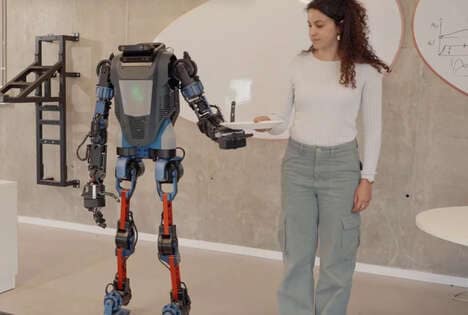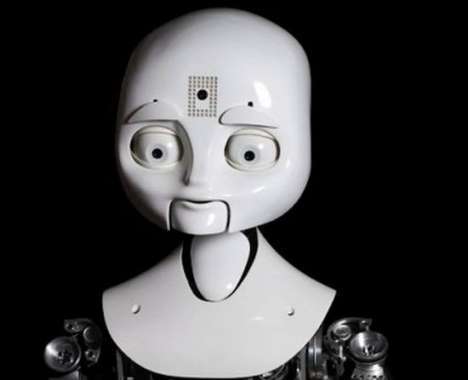

The University of Plymouth is leading a consortium in the UK with the goal of teaching a "baby" robot to speak. The researchers will be working with language development specialists to understand how humans learn speech, and will try to apply that approach to a humanoid robot called the iCub (which, incidentally, looks kind of like Caspar the Friendly Ghost). The first steps will be to teach the robot to name objects and actions and eventually rudimentary phrases, such as "robot puts stick on cube", according to BBC News.
Two researchers from the University of Hertfordshire's School of Computer Science, Professor Chrystopher Nehaniv and Professor Kerstin Dautenhahn, are part of the consortium working on ITALK, (Integration and Transfer of Action and Language Knowledge in Robots). Understanding human acquisition of language will be key. According to Prof. Nehaniv, "Like a child learning by imitation of its parents and interacting with the environment around it, the robot will master basic principles of structured grammar, like negation, by using these abilities in context."
Key Themes Behind This Trend
- Robot Language Learning
- The development of robots capable of acquiring language creates exciting opportunities for businesses to explore AI-powered customer service.
- Humanoid Robot Tech
- The ability to create advanced humanoid robots that mimic human interactions has the potential to revolutionize industries from healthcare to tourism.
- Cognitive Computing Innovation
- The use of artificial intelligence to power robots capable of learning could lead to disruptive innovation in everything from education to finance.
Where This Applies
- Education
- Robotic language learning could open new frontiers in education and create vast new markets for educational software.
- Healthcare
- Humanoid robots that can interact with patients could revolutionize healthcare, leading to more efficient patient care and streamlined diagnosis and treatment.
- Retail
- Integration of cognitive computing into robots could give retailers unique opportunities to engage with customers in new and innovative ways.