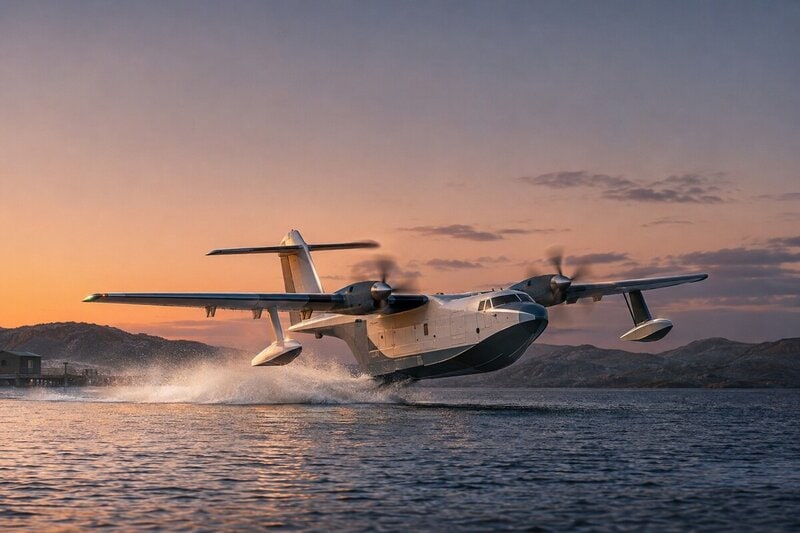
Maxwell's M1-HC freighter combines electric takeoff with diesel cruise, letting cargo move off the water without carrying full climb power for the whole flight. The hybrid amphibious plane from Maxwell Aircraft uses electric motors for a six-minute departure, then small diesel engines carry loads across 1,150 miles.
The first version is built around palletized freight, with a 5-ft cargo door for loading. Its amphibious setup lets it work from waterways and rough strips, which gives remote communities and island operators a way to move freight where runway access is limited.
At 1,150 miles, the M1-HC pushes hybrid aviation beyond short-range test cases and into a longer-haul cargo role. The mix of water access and diesel-electric efficiency could make the aircraft more useful for routes where moving payload matters more than using a conventional runway.
Image Credit: AI-generated
What's Driving This Trend
- Hybrid Freight Aviation
- Diesel-electric aircraft architectures create new possibilities for cargo operators seeking longer range without depending solely on conventional runway infrastructure.
- Amphibious Logistics
- Water-capable freight platforms expand access to island, coastal, and remote communities where traditional air cargo networks remain limited.
- Palletized Remote Delivery
- Standardized cargo loading in compact aircraft supports more efficient regional freight movement across underserved and infrastructure-constrained routes.
Who This Affects Most
- Aerospace
- Hybrid propulsion systems are reshaping aircraft design by combining electric lift performance with fuel-based endurance for practical commercial missions.
- Logistics
- Flexible cargo aircraft capable of operating from waterways and rough strips introduce alternative distribution models for hard-to-reach destinations.
- Marine Transportation
- Seaplane-based freight services blur the boundary between aviation and maritime mobility, creating new options for coastal supply chains.