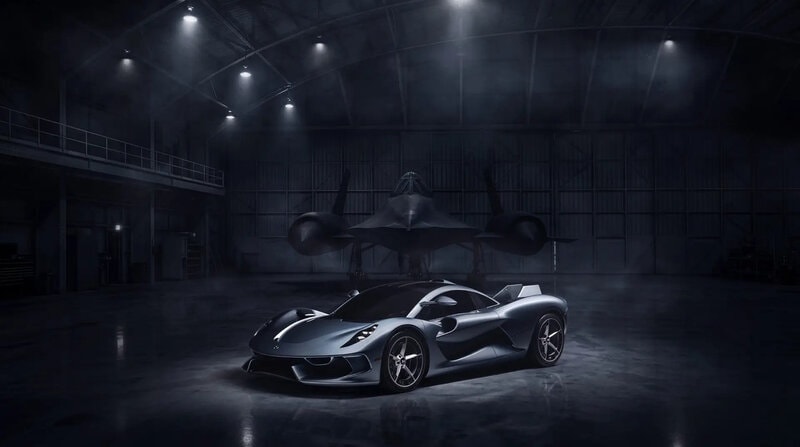
Hennessey has introduced the Hennessey Blackbird, a limited-run hypercar focused on analog controls and mechanical engagement. Inspired by the Lockheed SR-71 Blackbird, the model features an Ilmor-developed naturally aspirated 6.2-liter V-8 targeting 800–850 hp and a redline above 9,000 rpm, paired with a six-speed manual transmission and physical ignition key.
The Blackbird uses a carbon-fiber tub and bodywork, adaptive suspension with inboard linkage, and Michelin Pilot Sport Cup 2 tires. Its design includes deployable vertical stabilizers, Formula 1-inspired sidepods and aircraft-influenced detailing. Hennessey claims a 0–60 mph time of 2.5 seconds and a 220 mph top speed, with production limited to 71 examples and deliveries expected in 2029 or 2030.
For collectors, the Blackbird reflects renewed interest in tactile hypercars that prioritize sound, feedback and driver involvement over screen-heavy interfaces and hybridized powertrains.
Image Credit: Hennessey
What's Driving This Trend
- Analog Hypercars
- Tactile controls, manual transmissions and screenless cabins create space for ultra-premium vehicles that differentiate through sensory engagement rather than digital complexity.
- High-rev Engines
- Naturally aspirated powertrains with extreme redlines offer collectible performance brands a way to preserve emotional sound and mechanical character amid electrification.
- Aerospace-inspired Design
- Aircraft-derived styling, active stabilizers and advanced carbon structures signal opportunities for performance products that blend motorsport engineering with aviation mythology.
Who This Affects Most
- Luxury Automotive
- Limited-run hypercars built around exclusivity and driver involvement highlight demand for vehicles positioned as investment-grade mechanical artifacts.
- Performance Engineering
- Specialized engine development, adaptive suspension systems and lightweight materials open high-margin pathways for suppliers serving bespoke supercar platforms.
- Collector Markets
- Scarcity-driven models with analog features and distinctive narratives strengthen the role of rare vehicles as cultural assets within alternative investment portfolios.