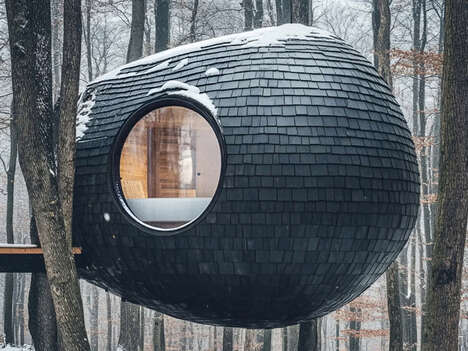
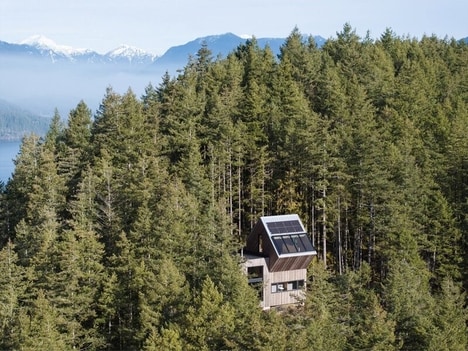
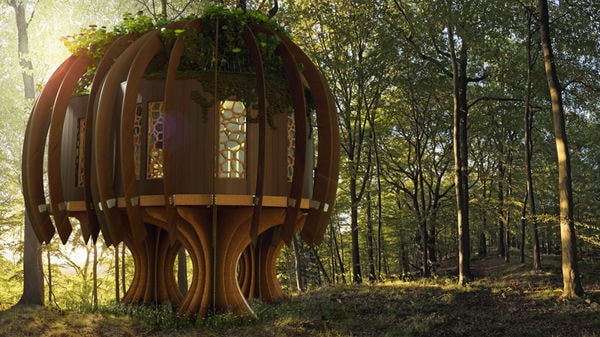
Somewhere on crown lands near Whistler, British Columbia, Canada, the Hemloft treehouse encircles the trunk of a tree hanging preciously over a steep slope in a coniferous forest. Its creator, Joel Allen, explains that the exact location of the egg-shaped treehouse is kept secret, as it is illegal to build on crown lands without the permission of the Canadian government. Still, the structure is only about a five minute walk from the nearest road, so it isn’t too detached from wider civilization.
Allen began his self-funded project while he was living out of the back of his car. He explains on his website that, because he was working in a forest, he could only use manual, non-electric tools to build the structure. Though, according to the maverick carpenter, he, “was armed with a couple of the most powerful tools a carpenter can have: blind naiveté and supreme determination.”
Key Themes Behind This Trend
- Eco-treehouse Living
- The Hemloft treehouse highlights the rising trend towards eco-friendly treehouse living.
- Off-grid Construction
- Joel Allen's self-funded project showcases the trend towards off-grid, sustainable construction methods.
- Nature-inspired Architecture
- The Hemloft's egg-shaped design, nestled among the trees, is part of a larger trend towards nature-inspired architecture.
Where This Applies
- Eco-tourism
- The growing demand for eco-friendly treehouses presents opportunities for the eco-tourism industry to diversify their offerings.
- Sustainable Construction
- The trend towards off-grid, sustainable construction methods provides innovation opportunities for sustainable construction companies.
- Architectural Design
- Nature-inspired architecture presents opportunities for architects to incorporate organic shapes and materials into their designs.