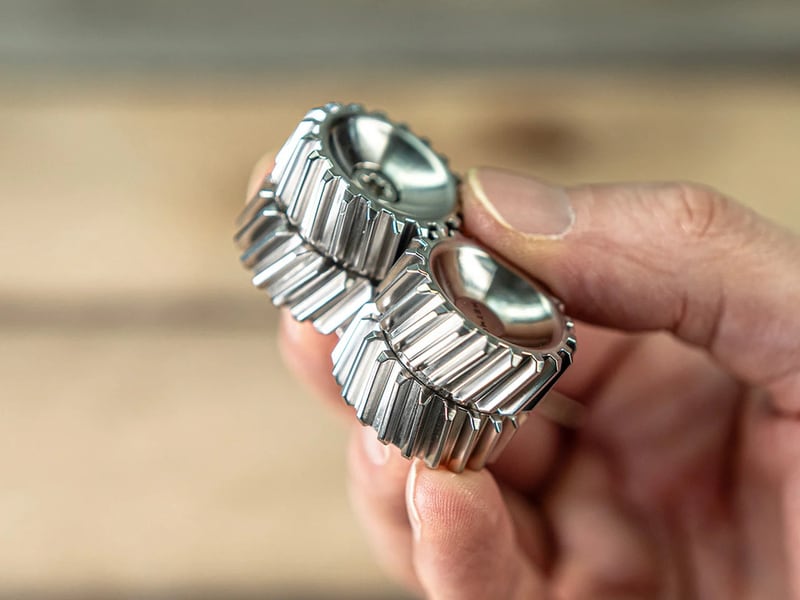
The Helico magnetic fidget by METMO is a compact desk object built around stacked cylindrical modules that mimic the geometry of helical gears. The design uses nickel-coated neodymium magnets to hold each section together while allowing them to be pulled apart, rotated, and snapped back into alignment. This interaction creates a repeated separation-and-reconnection loop that drives the tactile experience, with each movement producing a controlled magnetic feedback.
The exterior features herringbone grooves that guide the thumb and create a continuous rhythm when rolled between fingers, while the interior surfaces remain smooth to contrast the texture. It is available in brass, stainless steel, Grade 5 titanium, and nylon, with each material changing the weight and feel of the object. Brass develops a patina over time, stainless steel offers a neutral finish, titanium reduces weight, and nylon provides a lighter, matte alternative.
Image Credit: Sean Sykes & James Whitfield
Key Themes Behind This Trend
- Magnetic Modular Objects
- A proliferation of stackable magnetically coupled modules suggests new product families that combine reconfigurability with snap-fit tactile interactions.
- Tactile Rhythm Interfaces
- Designs that emphasize guided grooves and repeating motion patterns point to interfaces where haptic rhythm becomes a primary mode of user engagement.
- Material-weighted Personalization
- Offering the same form in metals and polymers highlights an opportunity for weight-and-finish choices to serve as a personalization axis for sensory-led products.
Where This Applies
- Desktop Wellness Products
- Small, hand-held objects featuring controlled magnetic feedback could reshape stress-relief and focus aids used in office and remote-work settings.
- High End Consumer Accessories
- Premium materials paired with mechanical interaction open possibilities for lifestyle items that trade digital features for crafted tactile luxury.
- Precision Mechanical Components
- The use of helical-geometry modules and strong neodymium magnets signals potential for compact, serviceable couplings in small-scale mechanical systems.