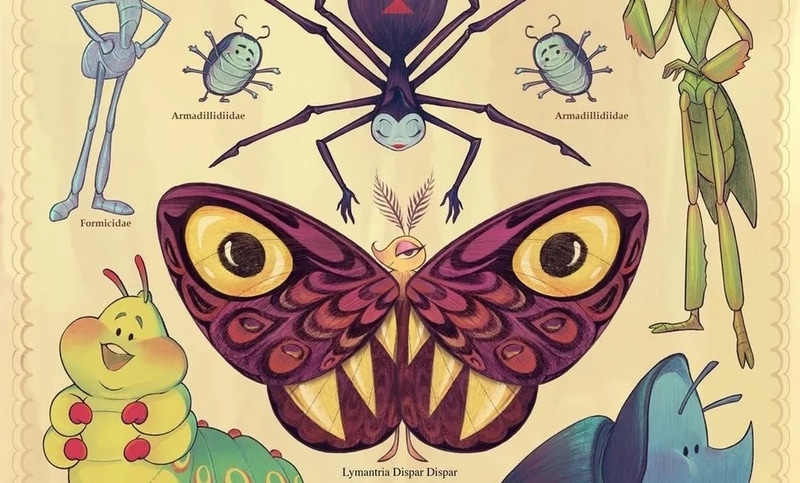
The Pixar A Bug’s Life botanical guide is an illustrated chart that reimagines the film’s characters through scientific classification. The Pixar A Bug’s Life botanical guide presents stylized versions of the original cast alongside their taxonomic identities, aligning each animated insect with its real-world counterpart. Characters such as Flik are labeled under Formicidae, while Rosie is identified as Latrodectus and Manny as Mantodea, translating familiar personalities into biological categories.
The chart was shared on social media as a reinterpretation of the 1998 film, pairing nostalgic character design with educational framing. Additional characters follow similar classification, including Francis as Coccinellidae and Dim as Dynastinae, reinforcing the scientific structure of the guide. The project connects animation with taxonomy, presenting the film’s world through a lens of biodiversity and natural science while maintaining the recognizable visual traits of each character.
Image Credit: Pixar
What Makes This Trend Stand Out
- Nostalgia-science Mashups
- Recontextualizing beloved IP with scientific frameworks creates crossover content that blends fandom appeal and educational credibility.
- Character Taxonomy Visualization
- Anatomical and taxonomic labeling of fictional figures demonstrates new ways to communicate complex biological data through familiar visual narratives.
- Edutainment Botanical Art
- Botanical-styled illustrations that pair aesthetic design with species information reveal demand for hybrid products that entertain while informing about biodiversity.
Sectors Adopting This
- Animation and Film
- A convergence of storytelling and scientific annotation offers alternative IP extensions and licensing models that reframe character assets as educational resources.
- Educational Publishing
- Illustrated guides merging pop culture and taxonomy present scalable content formats for curriculum-aligned materials and informal learning experiences.
- Natural History Museums
- Exhibition concepts that incorporate fandom-driven artwork with specimen-based interpretation provide novel audience engagement pathways and merchandising opportunities.