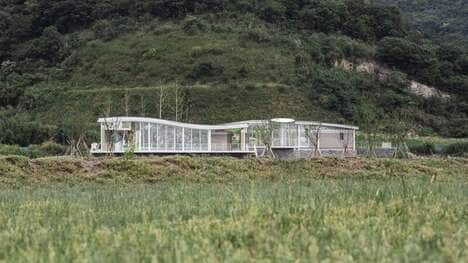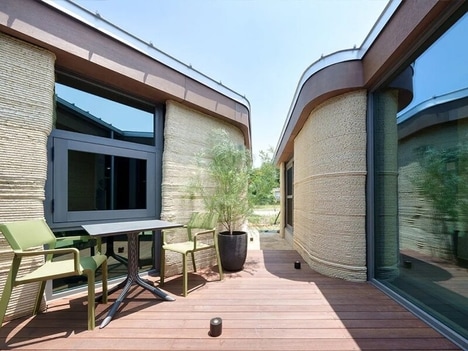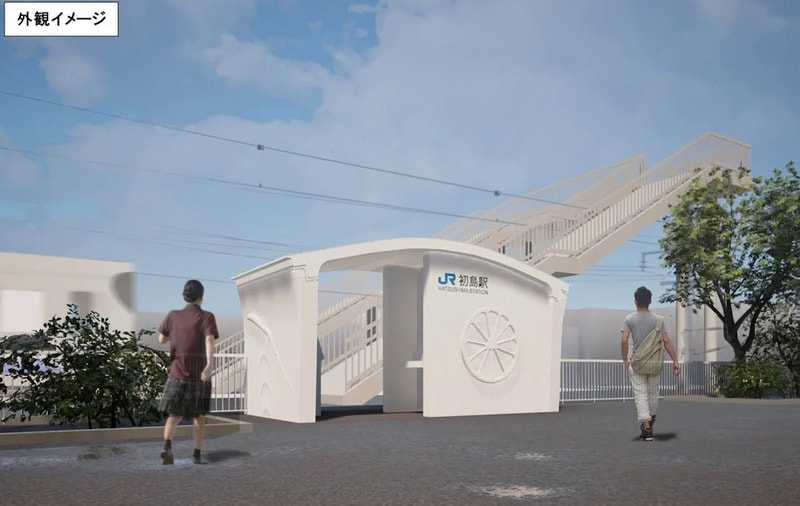
Japan unveils a unique new construction project as the team at West Japan Railway Company, also known as JR West has built the Hatsushima Station. It is a fully functioning station that was built only in three hours located in Wakayama Prefecture. It was printed off-site using four prefabricated sections.
The new building replaces the wooden station that once stood for over 75 years. The team worked in collaboration with 3D-printing construction company Serendix to develop the project. It was also made using advanced additive manufacturing with reinforcement methods. The sections were made from reinforced mortar and then filled on the spot with rebar and concrete in order to meet the seismic safety standards in Japan.
Image Credit: JR West
What's Driving This Trend
- Rapid Construction Techniques
- Utilizing 3D-printing technology for constructing infrastructure shortens building time to mere hours, significantly disrupting traditional construction timelines.
- Seismic-resistant Architecture
- Advanced additive manufacturing combined with reinforcement allows for the creation of structures that adhere to stringent seismic standards, enhancing safety in earthquake-prone regions.
- Off-site Prefabrication
- Constructing modular sections off-site enables precision in design and reduces on-site labor, transforming the way the industry approaches building processes.
Who This Affects Most
- Railway Infrastructure
- Integrating 3D-printing methods in railway architecture offers scalable solutions for infrastructure development, catering to modernization demands efficiently.
- Construction Technology
- The use of technologically driven construction methods such as 3D-printing introduces sustainable practices and reduces resource usage in the building sector.
- Seismic Safety Engineering
- Innovations in materials and construction techniques bolster the integrity of structures against earthquakes, leading to safer urban planning and development.