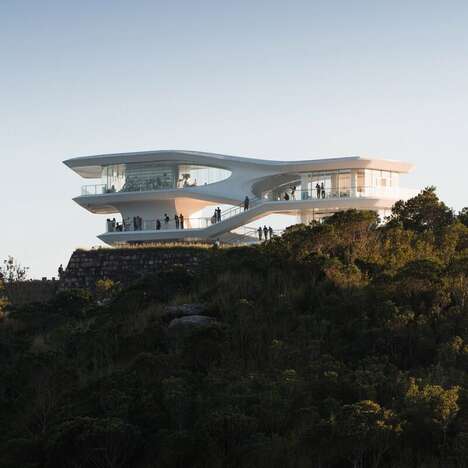
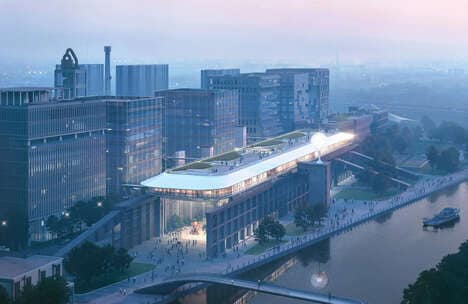
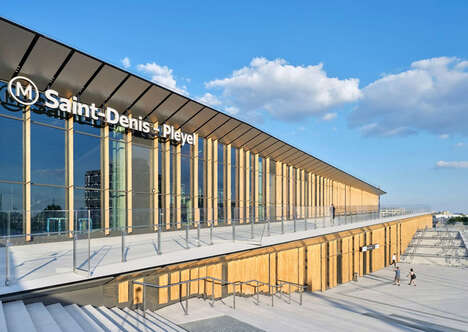
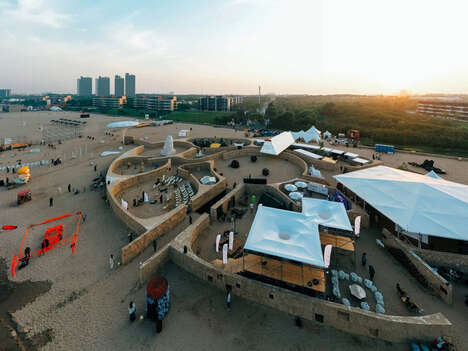
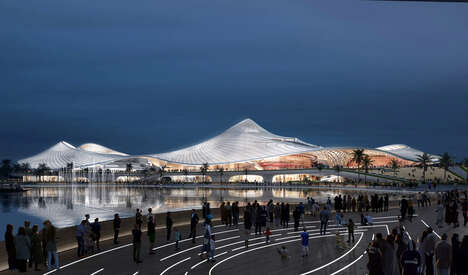
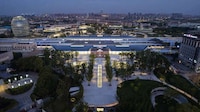
Design studio MAD, led by architect Ma Yansong blends various juxtaposing elements for the firm's first train station design. There are historical factors fused with modern elements as the building is located in Jiaxing, China -- it is dubbed Train Station in the Forest. It highlights a full-scale replica of a historical station that was first built in 1907 but then later destroyed by a bombing in 1937.
Yansong explains the design notion around the idea of movement, stating"I wanted to make a station to remind people [of] the history, or the narratives, around this location and to continue this legacy and to create something more about the future. When people come through this space they feel it's more like a museum about time, they can understand the history, or the past, [or] the future of the city."
Image Credit: MAD Architects
Key Themes Behind This Trend
- Historical-modern Fusion Architecture
- Architects are blending historical elements with modern design principles, creating structures that honor the past while embracing future aesthetics.
- Cultural Heritage Preservation
- Designers are incorporating cultural narratives and historical replicas in new constructions, turning buildings into living museums.
- Experiential Train Stations
- Train stations are being designed as immersive experiences, offering passengers a sense of movement through time and cultural history.
Where This Applies
- Architecture
- The architecture industry is exploring the integration of historical elements with contemporary design, leading to innovative and culturally rich structures.
- Transportation
- The transportation sector is reimagining train stations as multifunctional spaces that serve as cultural landmarks and historical reminders.
- Tourism
- In the tourism industry, destinations are becoming attractions by incorporating elements of local history and cultural significance into their design and infrastructure.