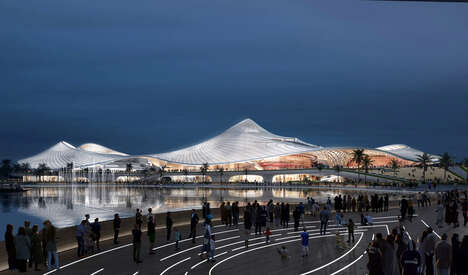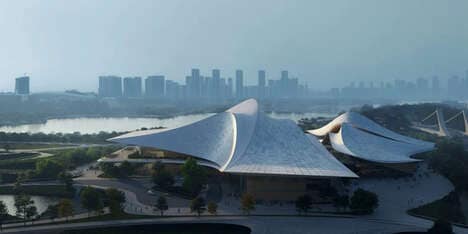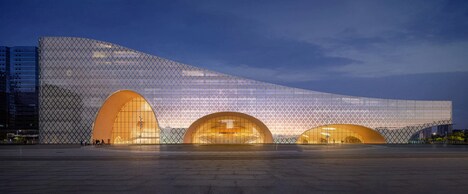

There is something truly majestic and graceful about the Harbin Cultural Island. I guess the fact that it looks like a monumental, man-made mountain would do the trick. Its simple, sweeping lines and snow-white exterior also gives it the look of gently sculpted ice caps. Considering that Harbin, China is known as the Ice City, I definitely see where the inspiration comes from.
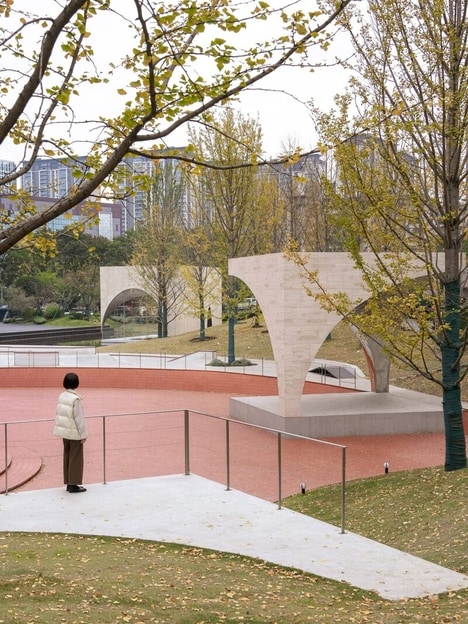
Designed by China's own MAD Architects, the Harbin Cultural Island is a 117,000 square-meter development that will act as a public space for theaters, studios, education facilities, an exhibition space and a variety of retail. Of course, it's the public park that will truly draw a crowd as it will take up about 70% of the space.
Surely the Harbin Cultural Island will also entice more tourists to this frosty land.
What Makes This Trend Stand Out
- Sculpted Architecture
- Majestic and graceful architecture that resembles sculpting provides an avenue for innovative designs.
- Public Parks
- Integrating public parks as the centerpiece of large-scale developments can attract and cater to more people.
- Cultural Development
- Developing cultural spaces and zones can enhance tourism and create an interest in visiting and exploring the area.
Sectors Adopting This
- Architecture
- There is an opportunity for architects to rethink how they design buildings, considering how sculpting can play a part in architecture.
- Tourism
- A focus on creating culturally significant and unique developments can help boost the tourism industry.
- Construction
- Incorporating public parks in large-scale developments can create a new design challenge for the construction industry to solve.