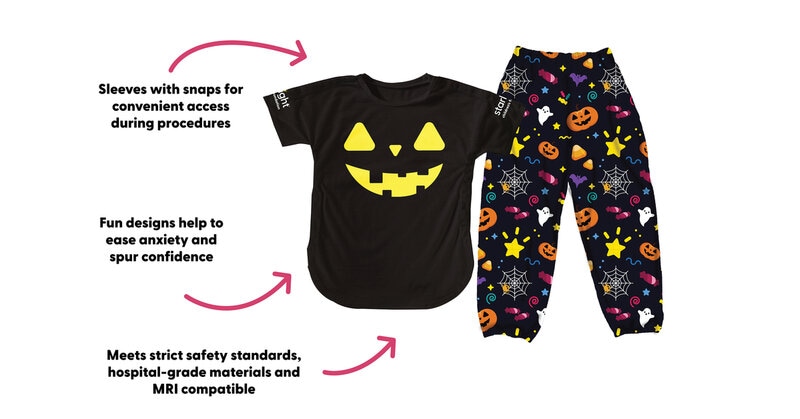
Starlight Children's Foundation is bringing Halloween-themed hospital wear and activity kits to pediatric hospitals nationwide for children spending the holiday in care. Its adaptive 'Hospital Gowns and Pants' replace traditional patient clothing with softer, T-shirt-like pieces that still allow staff access to equipment and procedures, so kids can dress for the season without sacrificing coverage or comfort.
The 'Patient Activity Kits' also serve as trick-or-treat bags, turning bedside play into part of the holiday routine. Each kit includes sensory toys and puzzles, while the clothing is cut to preserve dignity during treatment and reduce some of the stress tied to a hospital stay.
Nationwide distribution gives hospital partners a ready-made Halloween layer for pediatric care. Adaptive apparel that works around medical gear and kits that double as trick-or-treat bags turn support products into part of the celebration, not just treatment.
Image Credit: prnewswire.com
Why This Trend Is Growing
- Adaptive Holiday Carewear
- Seasonal patient apparel that accommodates medical access while resembling everyday clothing creates space for comfort, dignity, and emotional normalcy in pediatric care settings.
- Bedside Celebration Kits
- Hospital-friendly activity bundles that double as holiday props transform confined care environments into more participatory and memorable experiences for children.
- Therapeutic Costume Design
- Costume-inspired medical garments blend clinical functionality with self-expression, opening possibilities for apparel that reduces anxiety during treatment without disrupting workflows.
Industries Being Reshaped
- Pediatric Healthcare
- Hospitals serving children can expand beyond clinical treatment by integrating emotionally supportive products that make extended stays feel less isolating.
- Adaptive Apparel
- Medical-access clothing with playful, seasonal styling points to a growing market for garments that balance procedure compatibility with personal identity.
- Nonprofit Gifting
- Cause-driven product distribution models can package comfort, play, and practical utility into scalable programs for vulnerable patient communities.