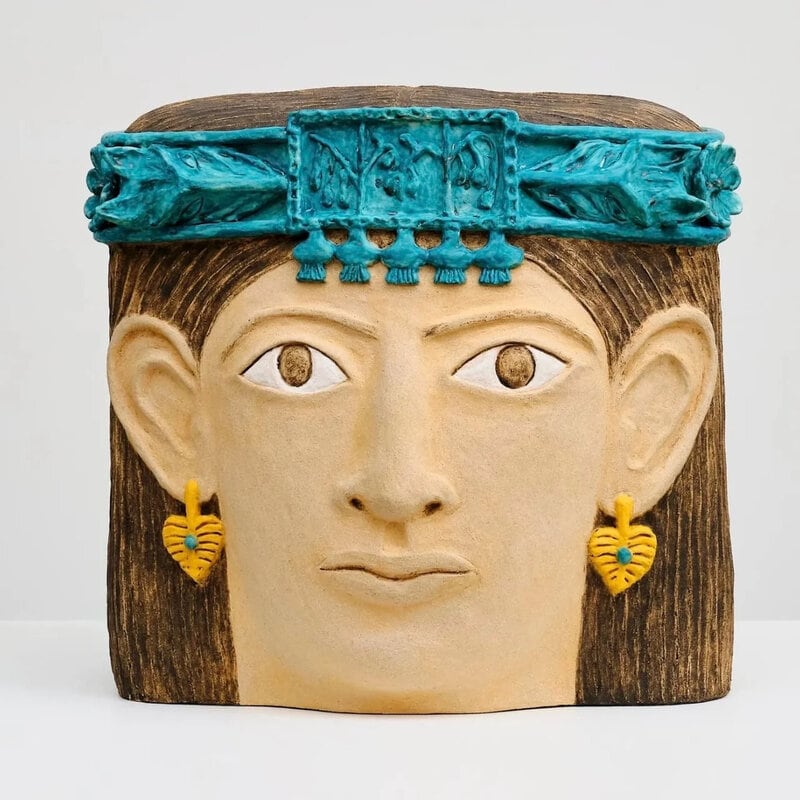
The Habibti ceramic figures are a series of glazed sculptures by Iraqi-American artist Maryam Yousif that draw on Mesopotamian and Assyrian visual traditions through contemporary ceramic forms. Each figure wears a patterned dress featuring motifs such as rosettes, protective eyes, pomegranates or repeated female faces, with vivid glazes in tangerine, blue, green and desert yellow distinguishing individual works. Simplified human forms with black hair and sculptural accessories reference historical imagery while establishing a cohesive cast of distinct characters.
The series takes inspiration from Sumerian votive figures that were placed in temples as symbolic stand-ins for worshippers. Yousif reinterprets that tradition by centering female figures and incorporating layered decorative patterns that reference Middle Eastern and North African cultural symbols. Standing under 20 inches tall, the glazed ceramic sculptures balance historical influences with contemporary craftsmanship
Image Credit: Maryan Yousif
What Makes This Trend Stand Out
- Heritage-inspired Ceramics
- Contemporary makers are translating ancient visual languages into collectible objects, creating space for culturally rooted design to enter modern art, décor and luxury markets.
- Patterned Figurative Sculpture
- Layered motifs on simplified human forms are giving sculpture a more narrative and identity-driven role within interiors, galleries and collectible design.
- Female-centered Cultural Symbols
- Reframed historical iconography centered on women is expanding how heritage storytelling can support new forms of representation in contemporary craft.
Sectors Adopting This
- Ceramic Art
- Glazed sculptural works that merge traditional references with modern silhouettes are reshaping demand for limited-edition and artist-led ceramic collections.
- Home Décor
- Culturally expressive figurines and patterned objects are influencing decorative accessories by blending historical meaning with contemporary visual appeal.
- Museum Retail
- Objects inspired by ancient civilizations and regional symbolism offer institutions new pathways for educational merchandise with collectible design value.