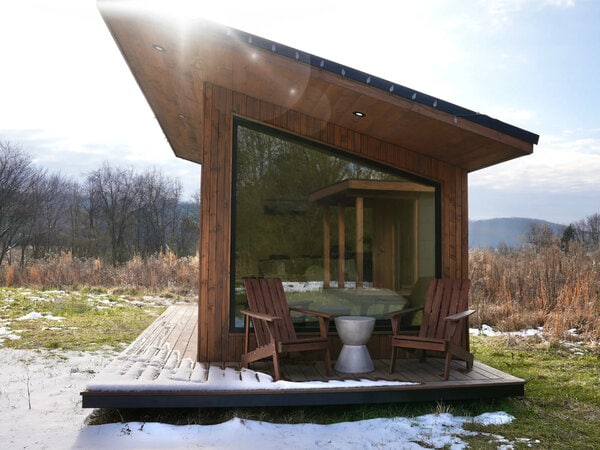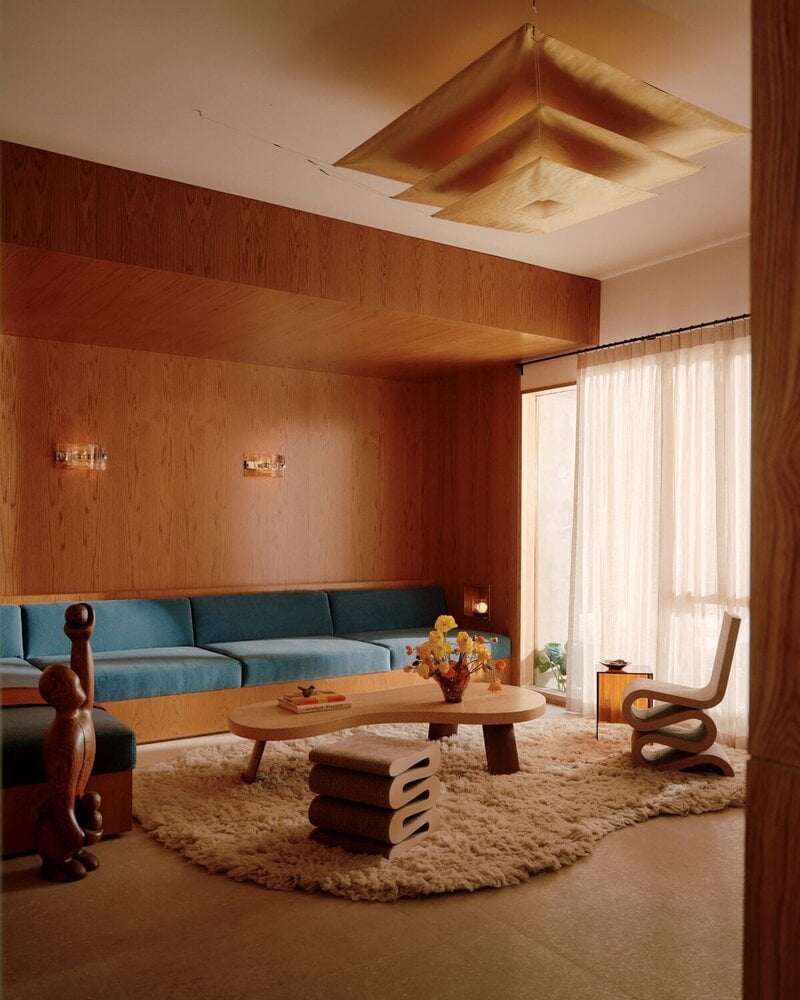
The Hollywood Hills residence renovated by Ome Dezin preserves architect Jeff Mills' 1990s blend of mid-century modern and brutalist architecture while introducing new interior finishes, custom details and collectible furnishings. Originally converted into an art gallery, the home was reconfigured with bedrooms, bathrooms, a gym and an exterior sauna to restore its residential function. Wood cladding wraps key living spaces and bathrooms, while limestone flooring was retained alongside new stone surfaces including a blue stone kitchen and a rust-toned island. Custom stained-glass windows and doors introduce jewel-toned accents throughout the material palette.
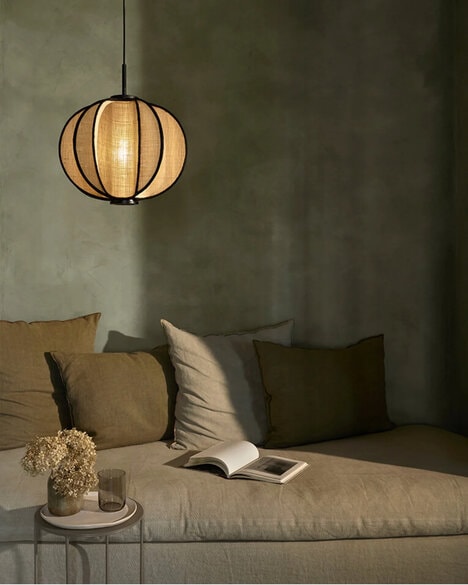
The interiors were furnished in collaboration with Lumens using lighting and furniture selected to complement the restored architecture. Fixtures by Ingo Maurer, Foscarini and In Common With accompany furnishings including Frank Gehry's Wiggle Chair, Gaetano Pesce's Up chair and Gubi dining chairs. Tall timber baseboards create continuity between rooms, while richly veined marble adds texture to the bathrooms.
Image Credit: William Jess Laird
What's Driving This Trend
- Restorative Luxury Renovations
- Historic residential properties are being reimagined with contemporary amenities while preserving distinctive architectural identities, creating demand for design services that balance heritage value with modern living standards.
- Collectible Interior Curation
- Furniture and lighting with cultural or designer significance are becoming integral to high-end interiors, signaling growth potential for platforms and consultancies that merge investment-grade design with residential personalization.
- Material-rich Living Spaces
- Layered use of wood, stone, stained glass and marble reflects a shift toward tactile, character-driven interiors, opening space for premium suppliers offering bespoke finishes and artisan architectural details.
Who This Affects Most
- Residential Interior Design
- Luxury homeowners increasingly seek interiors that combine custom detailing, collectible furnishings and architectural continuity, expanding opportunities for studios specializing in highly curated, renovation-led environments.
- Architectural Restoration
- Adaptive reuse of distinctive homes back into functional residences highlights a market for preservation expertise that integrates updated layouts, wellness amenities and material upgrades without erasing original design intent.
- Luxury Furniture and Lighting
- Designer fixtures and iconic seating are gaining prominence as architectural complements rather than decorative additions, strengthening prospects for brands that position collectible products within holistic home renovation projects.