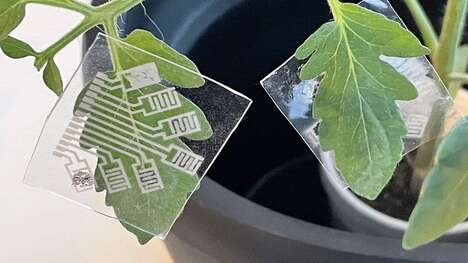


A group of scientists working out of Rice University have developed a high-tech GMO-detection device that is designed to identify and assess quantities of genetically modified organisms that have infiltrated environments that they could potentially harm.
While GMOs have a lot of proven benefits, they can become problematic in certain environments. This is what prompted the researchers to develop their device, which was inspired by a fictional Star Trek gadget used to analyze alien presence. This earthly device is called a Light Transmission Spectrometer, and is designed to scan for the presence of proteins that prove the presence of GMOs, so that proactive measures can be taken to reduce the impact of these organisms on crops.
In keeping with this GMO-detecting device's source of inspiration, it actually holds potential in being used to scan for traces of life in extraterrestrial worlds.
Key Themes Behind This Trend
- Gmo-detection Technology
- Opportunities for developing novel devices that leverage advanced spectrometry-based techniques to detect GMOs in crops and other environments.
- Star Trek-inspired Sensing
- Opportunities for applying science fiction-inspired themes to innovation in real-world sensing technologies such as identifying and assessing quantities of genetically modified organisms.
- Extraterrestrial Detection Technologies
- Opportunities to develop technologies capable of detecting life in extraterrestrial environments based on the principles behind the Light Transmission Spectrometer.
Where This Applies
- Agriculture
- GMO-detection technologies can be leveraged to assess levels of GMOs in crop yields with the potential to benefit stakeholders across the farming industry.
- Biotech
- The biotech industry can leverage GMO-detection technologies as tools to assess the environmental impact of genetically modified organisms on non-GMO organisms and ecosystems.
- Astrobiology
- Advanced sensing technologies inspired by the Light Transmission Spectrometer can be applied to the study and detection of extraterrestrial life, opening new opportunities for institutional research efforts in astrobiology and astrochemistry.