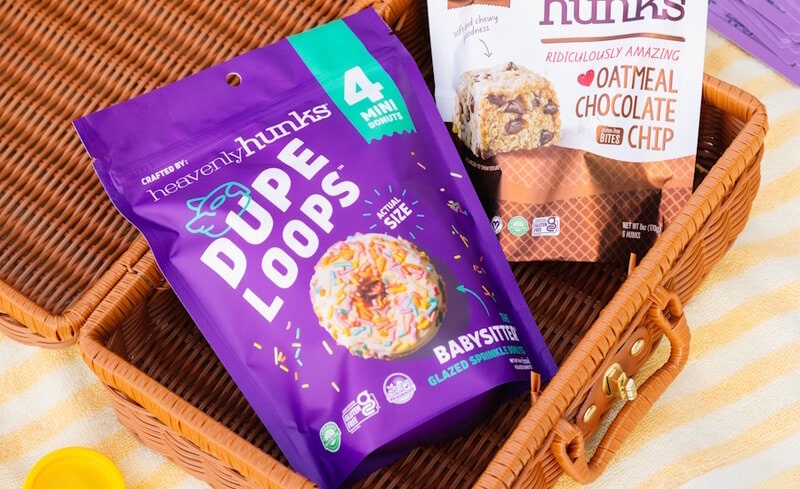
Heavenly Hunks is expanding Dupe Loops mini doughnuts to Sprouts Farmers Market and Costco, giving families managing celiac disease and food allergies more places to buy a shelf-stable treat without gluten or dairy. The Minnesota company already sells its snacks in about 16,000 retail locations, and Dupe Loops also reached Target stores and Target.com in September.
Sprouts is stocking Dupe Loops in 4-oz packs, while Costco is preparing a 13-oz Organic Babysitter pack for select regions later this month. The smaller format fits a quick snack, and the larger club size gives households a pantry option in the same shelf-stable form.
Placement in more than 500 Sprouts stores and a Costco organic exclusive moves allergy-conscious sweet snacks into the same mass channels as standard bakery treats. It turns dietary restrictions into a package-choice question instead of a reason to skip the doughnut aisle.
Image Credit: Heavenly Hunks
Key Themes Behind This Trend
- Allergy-friendly Indulgence
- Gluten-free and dairy-free treats entering mainstream retail channels signal whitespace for snack brands that combine dietary safety with familiar comfort-food formats.
- Shelf-stable Bakery Snacks
- Packaged doughnuts with pantry-ready positioning create potential for bakery alternatives that reduce spoilage while serving families seeking convenient allergen-conscious options.
- Club-size Specialty Foods
- Bulk formats for niche dietary products reflect growing demand for inclusive pantry staples that make specialized foods feel practical for everyday household consumption.
Where This Applies
- Gluten-free Foods
- Expanded distribution through Sprouts, Costco, and Target highlights how specialty diet products can shift from niche aisles into high-volume grocery destinations.
- Packaged Snacks
- Mini doughnuts designed for quick snacking illustrate an opening for portioned sweet treats that balance convenience, indulgence, and ingredient transparency.
- Grocery Retail
- Mainstream placement of allergen-conscious bakery products shows retailers can differentiate by treating restricted-diet shoppers as core family snack buyers rather than specialty customers.