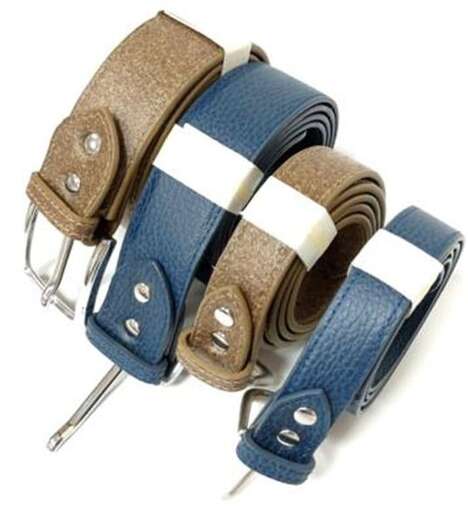
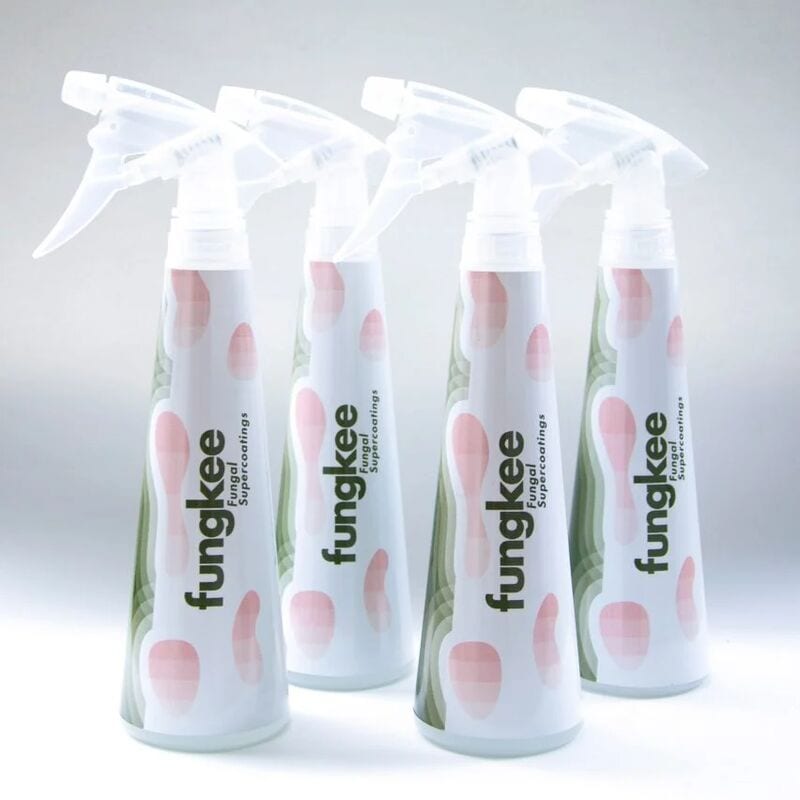
Dutch designer, Emma van der Leest, developed a fungal coating to better protect bio-leather. The designer is hopeful that bio-leather will replace animal leather in the fashion industry. To advance one step closer to her environmental aspirations, van der Leest created a protectant coating out of fungi to make the material more versatile.
Many plant-based leathers are not fully biodegradable due to the small amount of polyurethane included in its composition, which is used as a water-repellent. The designer explores whether fungus can replace the microplastics to truly sustainably plant-based leather materials and 100% biodegradable. As of now, the designer's formula is in its Beta stages with a speculative brand identity in the works called Fungkee.
Image Credit: Emma van der Leest
Key Themes Behind This Trend
- Bio-leather Sustainability
- There is a need for the development of sustainable and eco-friendly alternatives to animal leather utilizing materials that can biodegrade, such as fungi.
- Fungal Coatings
- The exploration of utilizing fungi as a coating can lead to the creation of more functional and versatile materials that can meet various industry applications.
- Plant-based Leather
- Innovations in the development of plant-based leathers can provide a more environmentally conscious option in the fashion industry.
Where This Applies
- Fashion
- The fashion industry can benefit from utilizing more eco-friendly and biodegradable materials, such as bio-leather, to align with consumer demands.
- Biotech
- Biotech companies can explore the use of fungi as a sustainable alternative to traditionally utilized materials in the creation of protective coatings.
- Environmental Services
- Environmental services companies can expand their offerings by providing solutions and resources for the development and scaling of sustainable materials, such as bio-leather with fungal protectants.