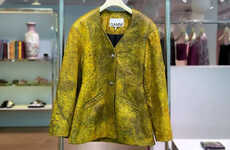

Thanks to the rise of forward-thinking fashion companies, there are many alt-leather jackets on the market but none are quite as unique as the jacket presented by fashion brand Ganni and materials company Polybion at the Global Fashion Summit in Copenhagen. Together, the companies debuted a jacket grown from bacteria, showing off the potential for bacterial cellulose to become an innovative and sustainable replacement for leather.
To create the design, bacteria was fed mango fruit waste from the agriculture industry and this process saw the sugar converted into cellulose. Following the bacteria's natural digestive process, the bacterial cellulose membrane was tanned and used to create a truly unique blazer, complete with buttons.
Polybion has dubbed this innovative material Celium and as co-founder Axel Gómez-Ortigoza told Dezeen, it "marks the culmination of a decade of work in bacterial cellulose."
Key Themes Behind This Trend
- Alt-leather Jackets
- The rise of alt-leather jackets presents disruptive innovation opportunities for fashion companies to explore sustainable and unique materials.
- Bacterial Cellulose
- The use of bacterial cellulose offers disruptive innovation opportunities in various industries by providing an eco-friendly and versatile material alternative.
- Sustainable Fashion
- The growing demand for sustainable fashion creates opportunities for brands to innovate and explore alternative materials like bacterial cellulose for clothing and accessories.
Where This Applies
- Fashion
- The fashion industry can leverage alt-leather jackets and explore bacterial cellulose as a disruptive innovation opportunity in creating sustainable and unique designs.
- Materials Science
- The materials science industry can benefit from the disruptive innovation opportunities presented by bacterial cellulose, exploring its potential applications in various fields.
- Agriculture
- By utilizing mango fruit waste to feed bacteria for cellulose production, the agriculture industry can discover disruptive innovation opportunities for sustainable resource utilization.