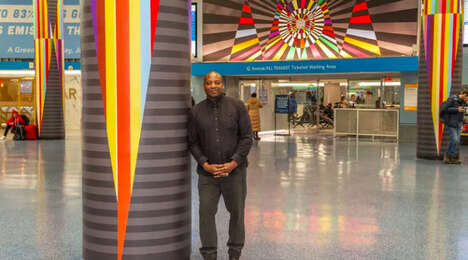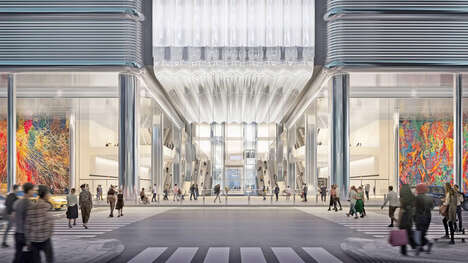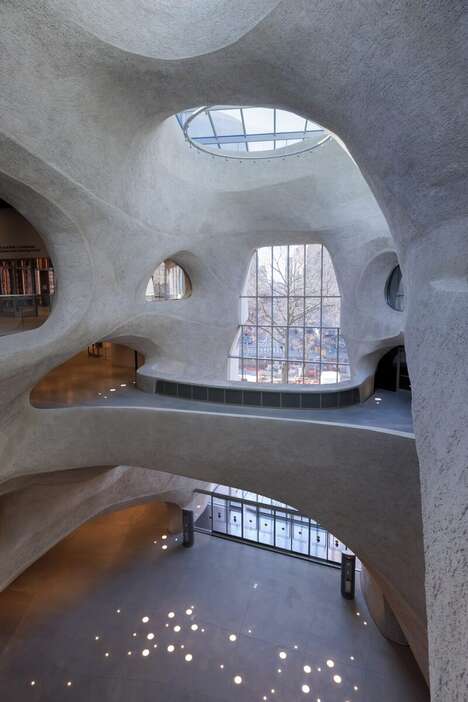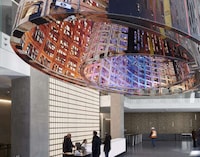
The renovated Fulton Center transit hub in Lower Manhattan, designed by Grimshaw Architects, aims to modernize the facility. While most underground stations tend to be dark and miserable-looking, Fulton Center is actually bathed in natural light thanks to the presence of a special kaleidoscopic skylight that functions as both an artistic and functional architectural element.
The central section of Fulton Center is a massive atrium that features the huge skylight, which is 16 meters in diameter. The skylight is situated 37 meters above the atrium floor at the pinnacle of a cone-shaped dome.
The dome itself is lined with a massive net structure consisting of 112 tensioned cables, 224 high-strength rods and nearly 10,000 stainless steel parts.
The structure is dubbed 'Sky Reflector-Net' and is designed to reflect light into the depths of the atrium.
What's Driving This Trend
- Kaleidoscopic Architecture
- Opportunity for architects to incorporate functional and artistic elements through the design of kaleidoscopic structures.
- Natural Light Integration
- Increasing demand for natural light integration in architectural design to improve aesthetics and promote energy conservation.
Who This Affects Most
- Architectural Design
- An opportunity for architects to utilize unique light-reflecting structures to create functional and visually appealing buildings.
- Urban Transit
- The integration of natural light and innovative architecture in public transportation systems creates an opportunity to enhance the commuter experience.
- Green Building
- Incorporating natural light into building design can reduce energy costs and carbon footprint, creating opportunities for growth in green building industries.