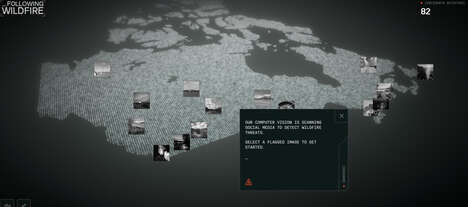
A group of scientists and researchers at Washington State University have created a spectacularly realistic cyber forest simulation that is capable of growing highly realistic forests, as part of a simulated computer model that makes it possible to predict how events such as droughts and recurring wildfires can have an impact on the forests of North America.
This forest simulation allows for the creation of virtual forests over periods of a few weeks. The simulation includes vegetation scaled up to produce entire forests. Complex elements such as root systems and canopy coverings are taken into account.
Ultimately, this highly realistic cyber forest simulation can greatly expand scientists' understanding of the effects of climate change on forests, enabling them to better preserve and protect forested landscapes.
What's Driving This Trend
- Virtual Forest Simulations
- The creation of virtual forests can lead to enhanced understanding of the effects of climate change and aid in preservation and protection efforts.
- Predictive Modeling
- The simulated computer model can help scientists predict the impact of events such as droughts and wildfires on forests in North America.
- Cyber Ecology
- The development of a highly realistic cyber forest simulation advances research opportunities in cyber ecology.
Who This Affects Most
- Environmental Science
- The cyber forest simulation can aid in the understanding of climate change effects on forests, leading to potential innovations in environmental science.
- Forest Management
- The simulation model can be used to optimize forest management strategies and provide valuable insights for forest rangers, logging companies and other forest management organizations.
- Computer Science
- The development of a highly realistic simulation of forest ecology can advance the field of computer science by providing innovative applications for virtual reality, machine learning and artificial intelligence.