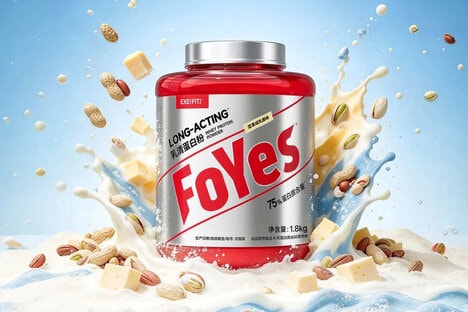

Yikena is expanding its yeast protein powder line beyond its sweet mung bean and taro milk options with 'Golden Osmanthus & Honey Sweet Potato,' a flavor built around roasted sweet potato and golden osmanthus. The company says it aims to give a protein shake a warm milk tea character, moving a familiar supplement format closer to a dessert-shop flavor.
The company says the powder is 75.6% protein, delivering 22.7g per serving while keeping carbs, sugar, and fat low. Glucosamine adds a joint-health element, according to the company, and Yikena is selling the powder in China in a 5lb tub meant for regular use at home.
Yikena shows how golden osmanthus and roasted sweet potato in a yeast protein powder can widen flavor options in the protein category, with a 5lb tub available in China.
Image Credit: AI-generated
Why This Trend Is Growing
- Dessert-inspired Protein
- Protein supplements are increasingly borrowing from milk tea, bakery, and dessert-shop flavor cues, creating room for functional nutrition products that feel more indulgent while maintaining low sugar and fat profiles.
- Localized Flavor Innovation
- Regional ingredients such as osmanthus and roasted sweet potato are reshaping supplement development, signaling opportunities for culturally specific formulations that differentiate crowded wellness categories.
- Multi-benefit Nutrition
- The addition of ingredients like glucosamine to high-protein powders reflects a growing preference for products that combine muscle support with adjacent health benefits such as joint care.
Industries Being Reshaped
- Sports Nutrition
- Flavor-forward, high-protein formats are expanding the appeal of performance supplements beyond athletes to everyday consumers seeking enjoyable daily nutrition routines.
- Functional Food and Beverage
- Supplement powders with dessert-like sensory profiles point to crossover potential between wellness products and cafe-style beverage experiences.
- Alternative Protein
- Yeast-based protein demonstrates how non-traditional protein sources can be positioned through taste, functionality, and familiar preparation formats to compete with dairy and plant proteins.
Featured Reports

The Death of Nuance

When AI Builds the Basket