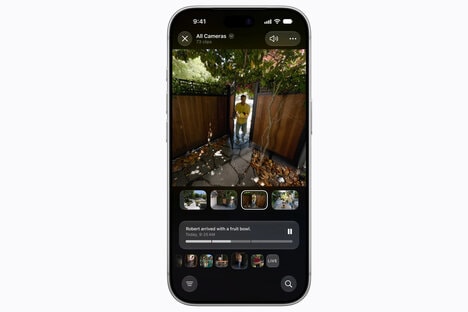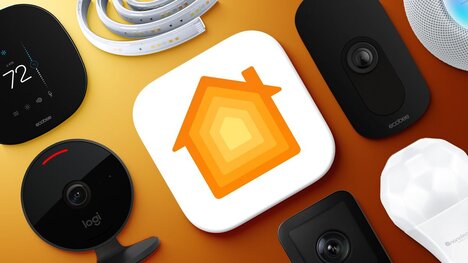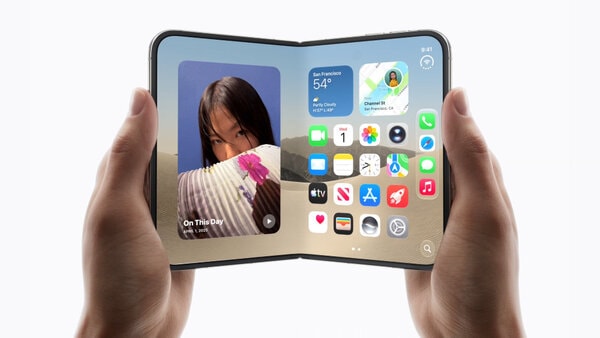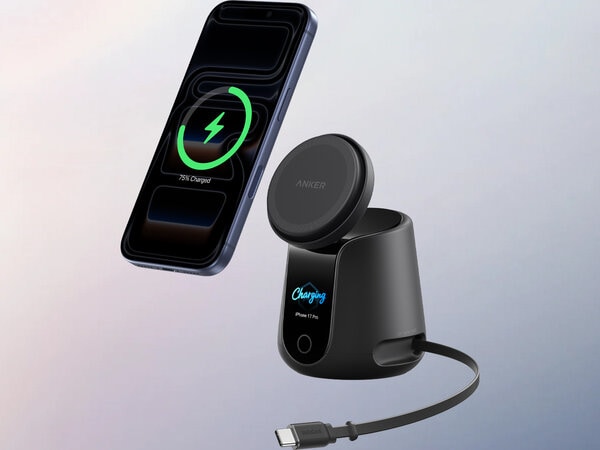
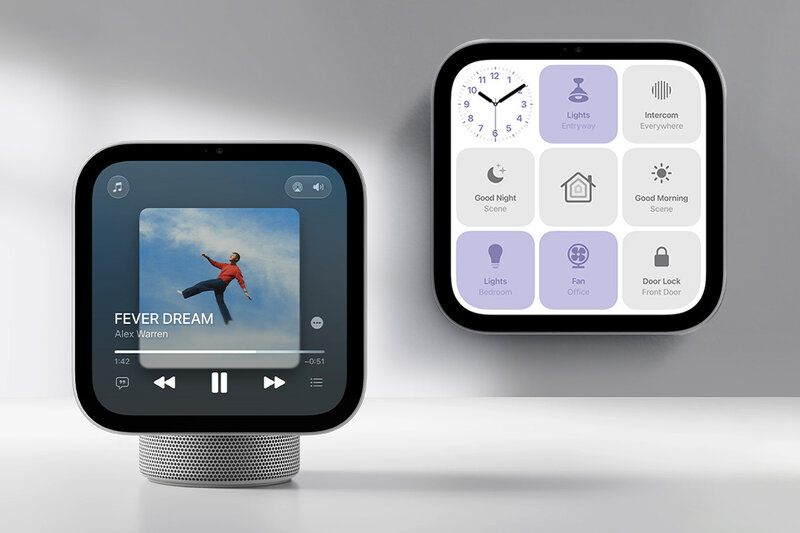
Apple is entering the smart display category with HomeView, its first screen-based hub for the home. Designed for households rather than a single user, it recognizes up to six people and swaps in each person's Messages, Calendar, widgets and home screen when they walk up. It comes in tabletop and wall-mounted versions.
Its 7-inch screen tilts on a hinge and drops to 0.3 nits for bedside use. A18 hardware keeps camera and mic data isolated, while deeper Siri AI context still depends on a nearby Apple Intelligence iPhone. Preorders are open now, with deliveries starting November 13, though the European Union is excluded.
At $299, HomeView turns multi-user recognition into a real buying reason for a home display, not just a privacy extra. The EU block and the iPhone tie-in keep it closest to existing Apple households, but the face-switched interface gives the category a clearer family use case.
Image Credit: Apple
What Makes This Trend Stand Out
- Multi-user Smart Displays
- Household hubs that adapt interfaces by person create room for shared-home devices that feel individualized without requiring separate accounts or manual switching.
- Privacy-first Face Recognition
- On-device identity processing in home hardware reshapes trust expectations for cameras and microphones embedded in always-available domestic interfaces.
- Contextual Family Interfaces
- Personalized calendars, messages and widgets on a communal screen point to new service models built around family coordination and ambient computing.
Sectors Adopting This
- Smart Home Technology
- Face-aware displays broaden the smart home market beyond controls and automation into personalized household operating systems.
- Consumer Electronics
- New screen-based hubs with adaptive profiles create differentiation opportunities in a category often defined by speakers, tablets and voice assistants.
- Digital Privacy and Security
- Local processing of biometric data strengthens demand for privacy architectures that support personalization while limiting exposure of sensitive household information.