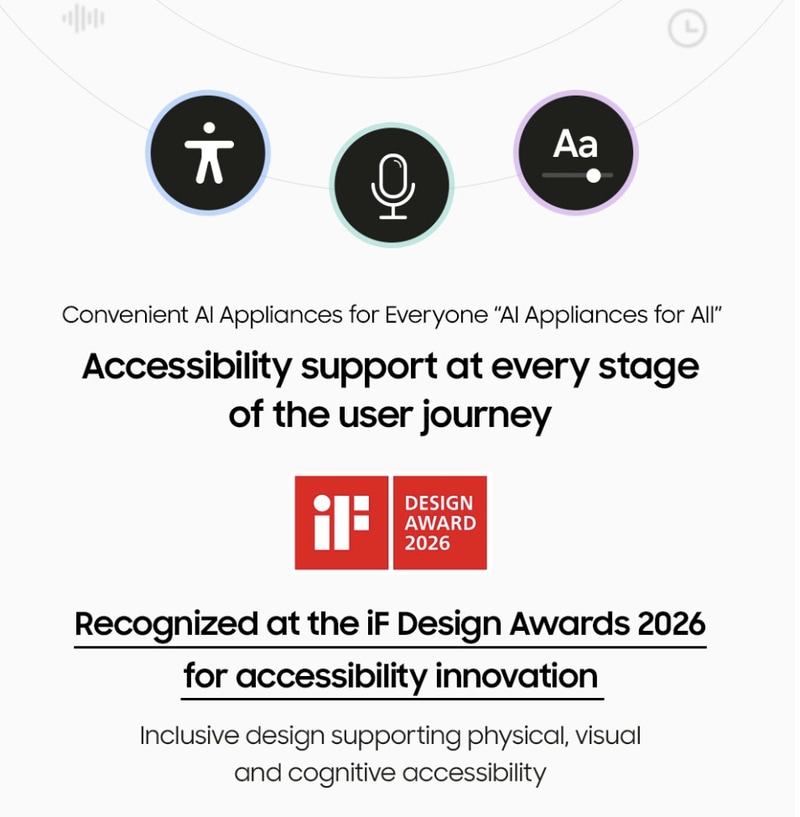
Samsung has integrated enhanced accessibility features across its AI-powered home appliances.
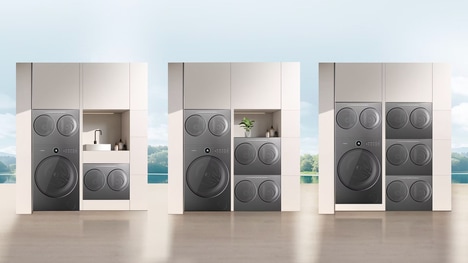
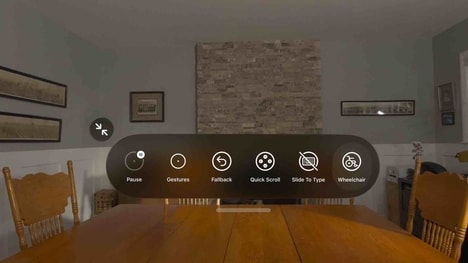
The Relumino outline function is a key example. It assists users with low vision by highlighting edges and improving contrast on screen-equipped devices such as the Bespoke AI Laundry Combo's seven-inch Smart Screen. Other highlights of Samsung's enhanced accessibility features rollout include voice-activated Auto Open Door, Easy mode for simplified navigation, and synchronization of accessibility settings between appliances and smartphones. All of these inclusivity-oriented innovations are worthwhile. For someone with limited hand mobility who cannot grip or twist a traditional oven or refrigerator handle, Auto Open Door responds to simple voice commands. The synchronization of accessibility settings between appliances and smartphones means that a user who has already configured their preferred text size, contrast levels, and voice feedback on their Galaxy phone will have those same preferences automatically applied to any compatible Samsung appliance they approach.
Image Credit: Samsung
What Makes This Trend Stand Out
- Voice-activated Appliance Interaction
- Hands-free control for users with limited mobility that reduces reliance on physical handles and enables mechanically simplified appliance designs.
- Cross-device Accessibility Synchronization
- Synchronization of personalization settings across phones and appliances that creates unified user profiles and streamlines assistive preference continuity.
- AI-enhanced Visual Assistive Features
- Outline and contrast enhancement technologies that improve screen readability for low-vision users and support context-aware visual augmentation within home devices.
Sectors Adopting This
- Consumer Home Appliances
- Adaptive interfaces in laundry, refrigeration, and cooking appliances that accommodate diverse physical abilities and encourage reimagined form factors and controls.
- Smartphone and Wearable Ecosystems
- Shared accessibility profiles between wearables and home devices that enable seamless preference transfer and tighter sensor-driven personalization.
- Assistive Technology and Rehabilitation
- AI-driven visual and voice interfaces that can augment traditional mobility aids and provide new opportunities for remote monitoring and therapy support.