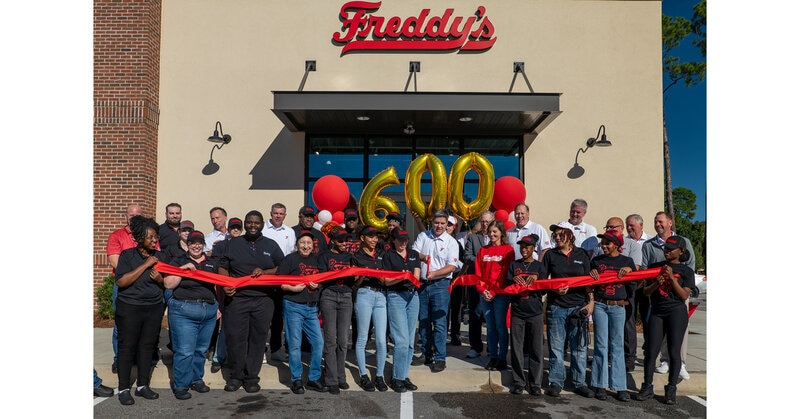
Freddy's Frozen Custard & Steakburgers expanded its restaurant format with an endcap, no drive-thru prototype that fits more site types than its traditional standalone build. The new location in Beaufort, South Carolina, marks the brand's 600th restaurant and keeps its cooked-to-order steakburgers and frozen custard on the menu.
The Beaufort restaurant seats 65 guests and adds an outdoor patio, giving the concept a smaller-footprint option without sacrificing dine-in capacity. That layout matters for franchisees considering tighter parcels and for operators trying to enter trade areas where a full standalone box is harder to place.
A 600-unit chain with flexible endcap and in-line formats has more ways to grow than a brand tied to one prototype. It also broadens where fast-casual burger chains can fit, especially in markets where real estate is already spoken for.
Image Credit: Freddy's Frozen Custard & Steakburgers
What Makes This Trend Stand Out
- Endcap Restaurant Prototypes
- Compact endcap layouts create growth pathways for chains constrained by traditional standalone real estate requirements.
- No-drive-thru Dining
- Smaller dine-in-focused formats reflect a shift toward site flexibility in markets where drive-thru lanes are impractical or unavailable.
- Flexible Franchise Footprints
- Multi-format restaurant models give franchise systems more adaptability across dense suburbs, infill locations, and constrained retail centers.
Sectors Adopting This
- Fast-casual Restaurants
- Brands using adaptable footprints can expand into previously inaccessible trade areas without abandoning core menu experiences.
- Commercial Real Estate
- Retail centers gain new leasing potential as restaurant tenants become better suited to endcap and in-line spaces.
- Franchise Development
- Prototype diversification strengthens unit economics by widening the range of viable parcels available to operators.