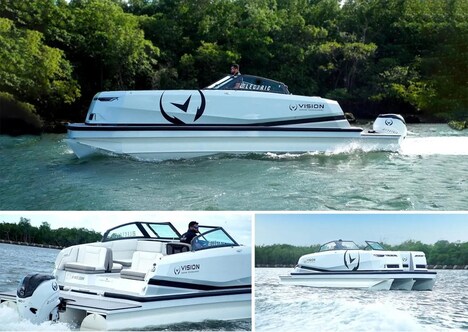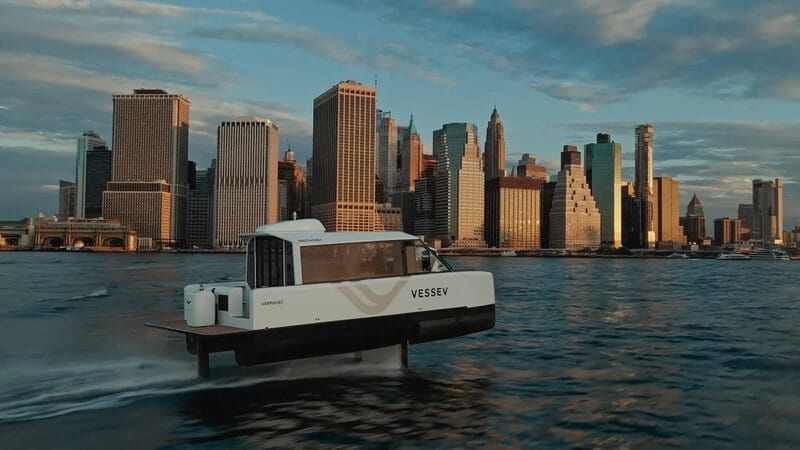
Vessev is bringing smoother, low-wake ferry travel to city waterways with the 'VS-9,' an electric boat that rides on hydrofoils, or underwater wings that lift the hull as speed builds. That setup reduces drag, extends battery life, and turns the usual chop into something closer to a glide.
The catamaran is about 30 feet long, with computer-guided flaps that keep it steady while the rear foil carries Vessev's in-house motor. Its foils can retract for shallower docks, and a standard EV charger can refill it without specialized charging gear on the pier.
For providers, this offers a smaller ferry format that fits existing dock access and familiar charging routines, rather than waiting for major new infrastructure. Transit operators, hotels, and tour companies get a short-route option that pairs passenger comfort with lower drag, while rivals now have to balance ride quality with operating costs.
Image Credit: Vessev
Key Themes Behind This Trend
- Hydrofoil Commuting
- Battery-powered hydrofoil craft create potential for faster, smoother urban water transit with lower energy demands and reduced shoreline disruption.
- Dock-compatible Electrification
- Standard EV charging and retractable foils point to new marine mobility models that can scale without costly waterfront infrastructure overhauls.
- Low-wake Passenger Travel
- Quiet, low-wake vessels open possibilities for premium short-route services in dense waterfront cities, resorts, and protected waterways.
Where This Applies
- Public Transit
- Municipal ferry networks could integrate compact electric vessels that improve rider comfort while lowering emissions and operating complexity.
- Hospitality Tourism
- Hotels, resorts, and tour operators gain a differentiated guest transport format suited to scenic routes, private transfers, and eco-focused experiences.
- Marine Technology
- Advances in computer-guided foils, electric propulsion, and lightweight vessel design are reshaping performance benchmarks for small passenger boats.