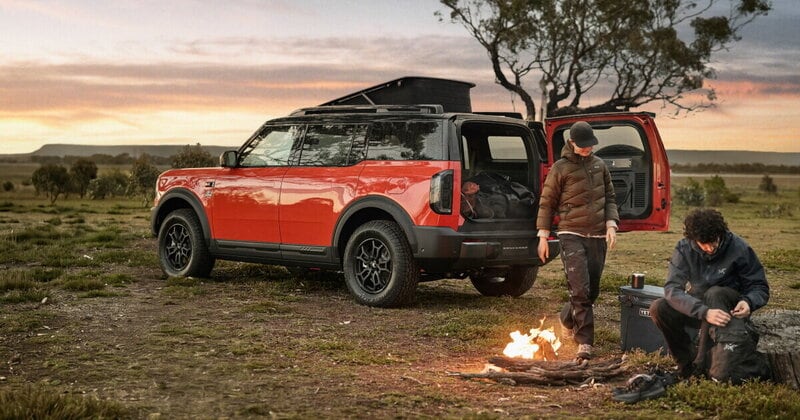
Ford’s Bronco Basecamp is a 2027 model for Australia and New Zealand that reframes the Bronco as an extended-range electric camping SUV with dual motors and a 49-kWh usable battery. A 1.5-liter turbocharged gasoline engine operates only as a range-extending generator, allowing the unibody, five-seat vehicle to behave more like an EV than a conventional hybrid.
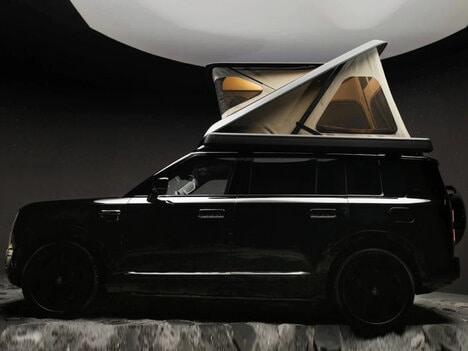
Ford is targeting a combined WLTP range of 500 to 560 miles, or 800 to 900 kilometers. The cabin converts into a sleeping area with an optional inflatable mattress. At the same time, Outer Banks models add a power-operated pop-up roof, a 7.5-liter warm-and-cool storage console and a rear swing-gate utility table. Pro Power Onboard supplies up to 6.6 kW through interior and exterior outlets.
The Basecamp reflects a shift from extreme off-road capability toward electrified adventure vehicles designed as mobile camps. By adapting a China-developed platform through its Jiangling partnership, Ford can extend the Bronco name into new markets and outdoor use cases while leveraging existing technology.
Image Credit: Ford
Why This Trend Is Growing
- Electrified Overlanding
- Battery-first adventure vehicles with range extenders create opportunities for quieter, lower-emission camping experiences without sacrificing long-distance travel confidence.
- Vehicle-to-campsite Power
- High-output onboard electricity positions SUVs as mobile energy hubs for appliances, gear charging and off-grid comfort in remote leisure settings.
- Convertible Cabin Camping
- Interior sleep systems, pop-up roofs and integrated utility surfaces signal a growing market for vehicles that blend transportation, lodging and outdoor lifestyle functionality.
Industries Being Reshaped
- Automotive
- Extended-range electric SUV platforms offer automakers a pathway to reposition iconic nameplates around practical adventure use rather than traditional performance benchmarks.
- Outdoor Recreation
- Electrified camping vehicles expand the outdoor market by making remote travel more accessible to consumers seeking comfort, power and reduced emissions.
- Travel and Hospitality
- Self-contained mobile accommodation features introduce new competition and partnership potential across campsites, eco-tourism operators and experiential travel providers.