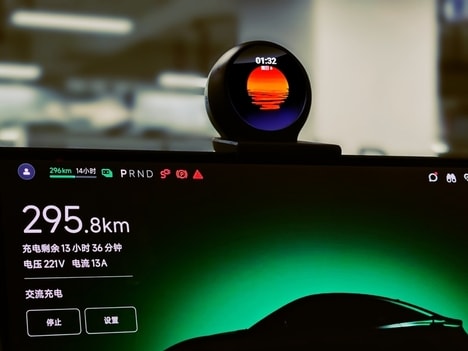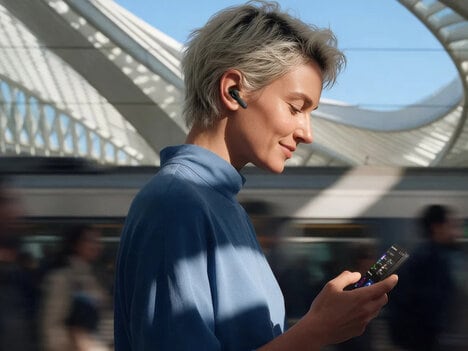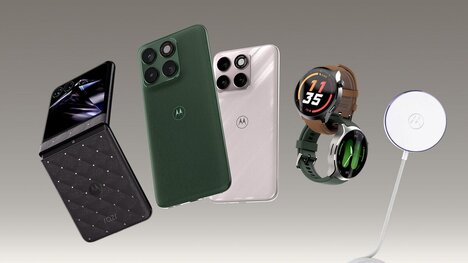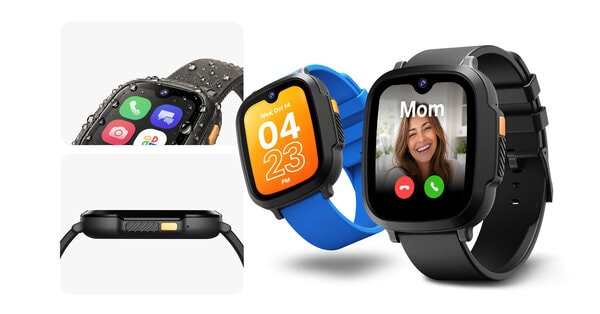
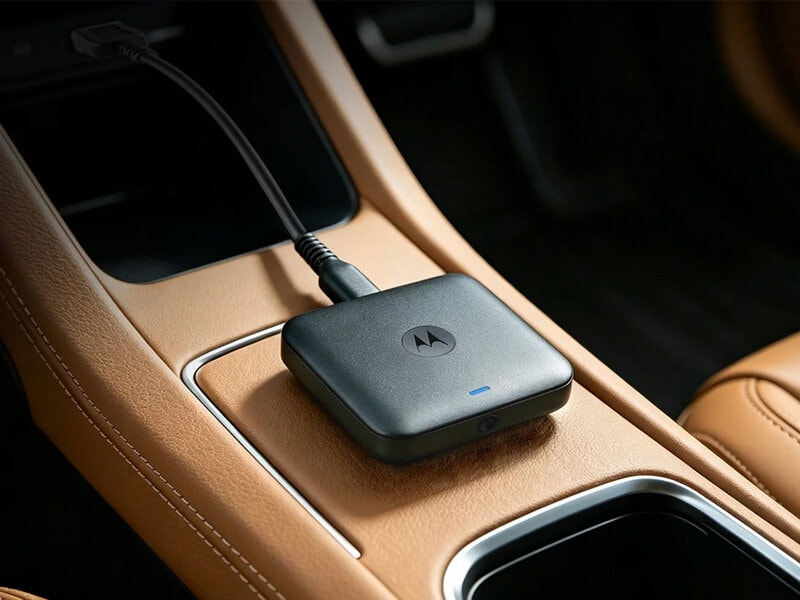
Motorola’s MA2 wireless Android Auto adapter adds physical buttons that let drivers switch between two paired phones or disconnect without unplugging the device. Designed for cars that already support wired Android Auto, it connects a phone to the dashboard wirelessly, so drivers can leave their devices in their pockets.
The adapter remembers two phones, making it useful for shared vehicles where different people take turns driving. After the initial Bluetooth connection, it uses 5 GHz Wi-Fi to maintain the link. A USB-C port and gel pad also help keep it secure near recessed console ports.
Priced at $69.99 for US orders, with first deliveries expected in December, the MA2 is aimed at households sharing a compatible car. Its controls give drivers more say over which phone connects and when the adapter is active.
Image Credit: Designer: Motorola, Google
What Makes This Trend Stand Out
- Shared-vehicle Connectivity
- Multi-user wireless adapters reflect growing demand for in-car systems that accommodate households, partners, and fleet users with fewer setup frictions.
- Physical Control Interfaces
- Dedicated buttons for pairing, switching, and disconnecting introduce a tactile layer of control that can improve trust in increasingly automated dashboard experiences.
- Retrofit Wireless Upgrades
- Affordable plug-in accessories are extending the lifespan of wired infotainment systems by adding modern wireless functionality without full vehicle replacement.
Sectors Adopting This
- Automotive Accessories
- Compact connectivity add-ons create room for aftermarket brands to modernize older vehicle cabins with simple, device-specific upgrades.
- Consumer Electronics
- Cross-device switching hardware highlights opportunities for electronics makers to solve everyday friction in shared technology environments.
- Connected Mobility
- Wireless infotainment tools support a broader shift toward personalized, software-driven mobility experiences across privately owned and shared vehicles.