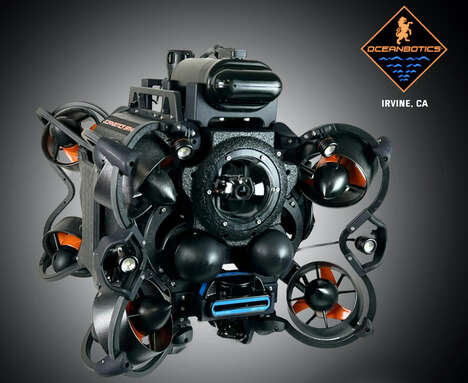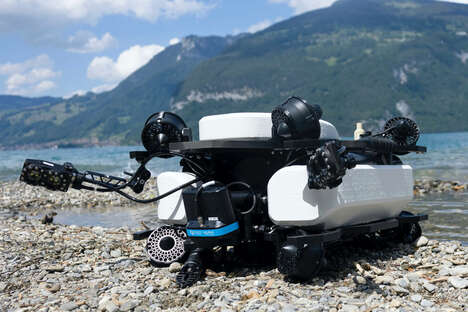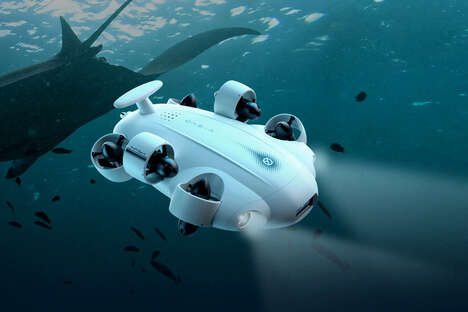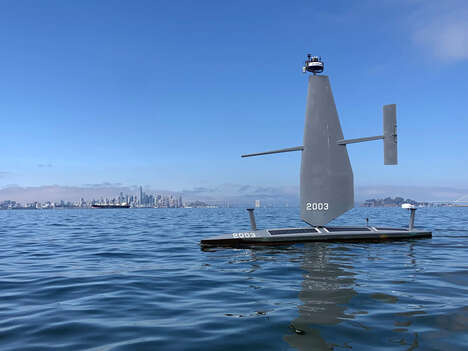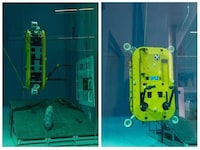
The DEDAVE is far from the first autonomous underwater vehicle to be developed, but what's unique about this particular vehicle is that it is designed with a view to series production.
While pricing details have not been revealed, this vehicle will be less expensive than other autonomous underwater vehicles due to its embracing of automobile industry-style assembly line production. It weighs less than 700 kg making it relatively lightweight compared to other similar vehicles. The DEDAVE is powered by eight batteries, with a full charge allowing for 20 hours of autonomous travel to a depth of up to 6,000 meters.
The autonomous underwater vehicle is set to take off in the coming decades, and DEDAVE is getting a leg-up on the competition thanks to its relatively low price.
Key Themes Behind This Trend
- Series Production of Autonomous Underwater Vehicles
- Embracing automobile industry-style assembly line production can disrupt the market by reducing costs and increasing production efficiency.
- Lightweight Autonomous Underwater Vehicles
- Developing lightweight vehicles that offer high performance can lead to disruptive innovation opportunities in the underwater exploration industry.
- Extended Battery Life for Autonomous Underwater Vehicles
- Improving battery technology to enable longer autonomous travel durations can create new possibilities for underwater research and exploration.
Where This Applies
- Automotive Industry
- The automotive industry's expertise in series production can be leveraged to disrupt the autonomous underwater vehicle market and make them more affordable.
- Marine Exploration Industry
- The development of lightweight and more efficient autonomous underwater vehicles can revolutionize the way marine exploration is conducted.
- Battery Technology Industry
- Advancements in battery technology can spark disruptive innovation in the field of autonomous underwater vehicles, enabling longer and more extensive travels.